If you have ever wondered whether you can calibrate scale without weights sitting right there in your kitchen drawer, the answer is a resounding yes. A single United States nickel weighs exactly 5 grams, a fact that turns ordinary pocket change into a dependable calibration tool for anyone who does not own an official certified weight.
In a world where everything moves at a fast pace because of modernization and state-of-the-art technology, people are becoming more and more obsessed with finding practical shortcuts that still deliver professional results. Calibrating a scale without weights is one remarkable discovery in the area of measurement that we are happy to walk you through today.
Key Takeaways
| Method | What You Need | Best Used For |
|---|---|---|
| Nickel method | One or more U.S. nickels (5 grams each) | Pocket scales, jewelry scales |
| Quarter method | New, unworn quarters (approximately 5.67 grams) | Digital kitchen scales |
| Water method | 100 mL distilled water (approximately 100 grams) | Larger capacity food and lab scales |
| Certified weights | Purchased calibration weights | Laboratory and legal-for-trade scales |
| Professional service | A scale calibration company | Truck scales, medical equipment, industrial devices |
- Can you calibrate scale without weights and still get accurate results? Yes, provided you use consistent, unworn coins or a measured volume of water. See our full digital scale calibration walkthrough for exact steps.
- How much does a nickel actually weigh? Exactly 5 grams under normal conditions, as explained on our nickel weight reference page.
- What weighs close to 100 grams for calibration checks? Several household items qualify, and we list them on our what weighs 100 grams guide.
- Is scale calibration really necessary for a home kitchen scale? Yes, an inaccurate scale could damage the business of anyone who bakes, sells, or portions food professionally.
- When should you hire a scale calibration company instead of doing it yourself? Legal-for-trade equipment, truck scales, and medical devices require certified calibration weights and documented service records.
Why Scale Calibration Matters More Than You Might Think
Measuring everything is been a practise which is followed by the people over many years. They always want to evaluate the quality or weight of a particular substance by using certain devices, and scale calibration sits at the center of that entire practice.
Scale calibration is very important because an inaccurate scale could damage the business, whether that business is a bakery weighing flour or a pharmacy weighing medication. Even in a laboratory setting, results are totally dependent upon the exact weight recorded.
Small scales are susceptible to experience damages or inaccuracy in results because these are sensitively built. That sensitivity is exactly why learning to calibrate scale without weights is such a useful, everyday skill.
Can You Really Calibrate a Scale Without Weights?
Calibrate a digital scale with or without weights is not that difficult once you understand the logic behind it. Official calibration weights are usually very expensive, which can be easily lost, and this is precisely why our guide to calibrating a pocket scale without weights focuses on household substitutes instead.
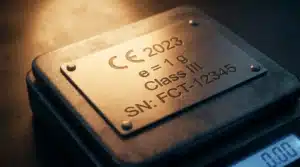
The first thing you need to do is determine the maximum capacity in terms of the weight of your scale. You may find this information on the instructional manual of your device, or sometimes it is listed directly on the tag of the scale itself.
Once you know your instrument’s weight maximum capacity, gathering a few alternative weights, cleaning the platform, and testing on a flat surface will get you most of the way to a properly calibrated reading.
How to Calibrate a Digital Scale Without Weights: Step-by-Step
Following a consistent process is the difference between guessing and genuinely accurate scale calibration. Below is the order we recommend, based on the same logic used across our complete digital scale calibration instructions.
- Determine the maximum capacity of your scale from the manual or the label.
- Gather alternative weights, such as new and shiny quarters that weigh around 5.67 grams.
- Set your digital scale on a completely even and flat surface, then turn it on.
- Wait for a few seconds to have stability on the readings of your scale.
- Press the tare or zero button so the display reads exactly zero.
- Place your chosen coin or object on the platform and compare the reading to its known weight.
- If the scale does not read at exactly 5.67 grams, then you need to make some adjustments to its calibration.
This same sequence works whether you use quarters, nickels, or a measured amount of water, which makes it one of the most flexible ways to calibrate scale without weights that we have documented.
Calibrate Scales With Coins: Nickels, Quarters, and Certified Weight Alternatives
Nickel is a chemical element that has an atomic number of 28 and carries the symbol Ni. It is a silvery-white radiant metal with a bit of golden tinge, and it happens to be malleable enough that the United States Mint produces it with remarkable weight consistency.
Because of that consistency, learning how to calibrate scales with coins has become a genuinely reliable substitute for certified weights among hobbyists, students, and small business owners alike.
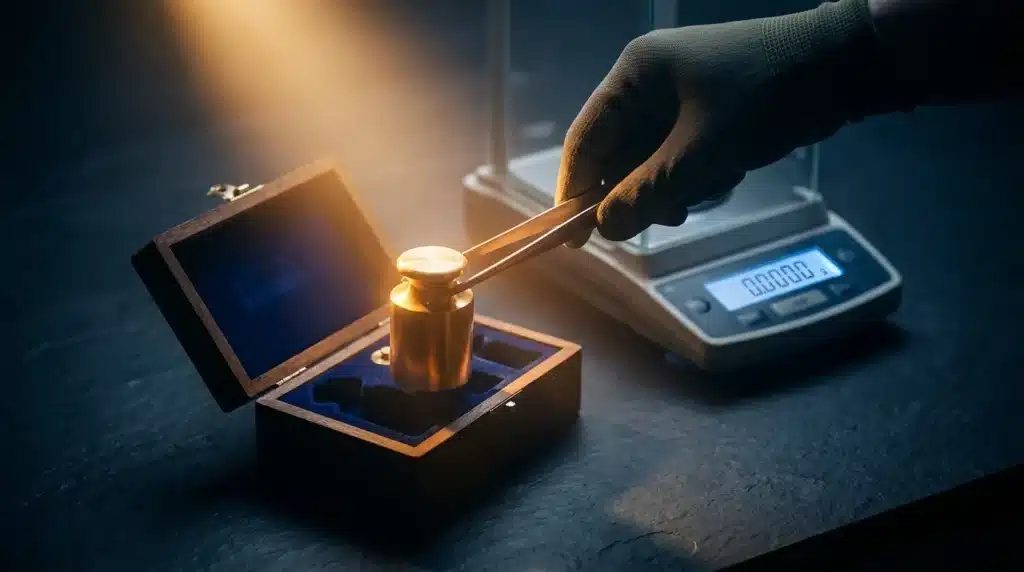
You don’t need professional calibration weights, use these standard test masses to verify your scale’s accuracy.
Coins work well for everyday checks, but they are not a substitute for certified weights for scales used in regulated environments. If your business requires documentation, certified weights remain the standard, and coins should be treated as a quick verification method rather than a legal record.
How to Calibrate Kitchen Scale Without Professional Weights
Anyone searching for how to calibrate kitchen scale without buying a specialized kit will be glad to know that water offers a remarkably simple solution. Under standard temperature and pressure, 100 mL of distilled water weighs approximately 100 grams, which makes it an excellent volume-based reference.
Our what weighs 100 grams reference lists several everyday items close to this mark, which is useful if you are curious enough about a certain object’s exact weight before you trust it as a calibration standard.
Simply zero the scale, place your measured water or reference item on the platform, and compare the reading. If the number does not match, small adjustments to the calibration setting will bring it back in line.
Weight Watchers Digital Scale Calibration and Other Consumer Devices
Weight Watchers digital scale calibration follows the same basic principles as any other household unit, though these devices are frequently used daily and therefore drift out of accuracy faster than industrial models. Wear and tear on the internal load cell is the usual culprit.
We recommend checking your Weight Watchers digital scale calibration at least once a month using a nickel or a small stack of quarters, since consistent daily use makes these consumer scales particularly susceptible to gradual inaccuracy.
Calibration Weights, Calibration Weight Class, and Certified Calibration Weights Explained
A guide to calibration weights would not be complete without explaining calibration weight class, which refers to the tolerance standard a weight must meet to be considered accurate for a given purpose. Classes range from laboratory-grade precision down to more general commercial use.
Our calibration weights overview explains how certified calibration weights are tested against a traceable standard, ultimately tracing back to the kilogram maintained by NIST, whose current Consensus Value carries an uncertainty of only ±0.020 mg.
For most home and small business use, DIY methods are sufficient. For regulated industries, certified weights and documented calibration weight class ratings are simply non-negotiable.
When to Call a Scale Calibration Company for Professional Services
There comes a point where a scale calibration company becomes more practical than a nickel and a bit of patience. Businesses that rely on precise, legally defensible measurements typically need weight calibration services performed on a regular schedule.
Searching for a scale calibration service near me is a common first step for pharmacies, laboratories, and shipping companies that cannot risk an inaccurate reading. Many of these providers also offer balance calibration services for analytical balances used in scientific and pharmaceutical settings.
Full-service scale calibration services generally include documentation, traceable certified weights, and a technician visit, which brings peace of mind that coins simply cannot provide for regulated equipment.
Truck Scale Calibration, Medical Equipment Calibration Services, and Thermometer Calibration Services
Not every calibration challenge fits neatly into a kitchen drawer solution. Truck scale calibration, for example, involves platforms rated for tens of thousands of pounds, and these require certified test weights transported by specialized vehicles rather than a handful of quarters.
Hospitals and clinics rely on medical equipment calibration services to keep infant scales, adult beam scales, and diagnostic instruments within strict tolerance. Verifying an infant scale against a 20 lb test weight, for instance, should keep the reading within plus or minus 1 ounce, and an adult beam scale should stay within a quarter pound for the same 20 lb test.
Laboratories often bundle thermometer calibration services alongside their scale checks, since temperature and mass measurements frequently work together in regulated testing environments. These specialized needs are exactly where a scale calibration company earns its keep.
Gage Calibration Software and On Site Calibration for Modern Businesses
Larger operations increasingly manage their equipment through gage calibration software, which tracks due dates, tolerance history, and certificates for every instrument on the floor. This kind of record keeping is difficult to maintain manually once a facility has more than a handful of scales.
On site calibration has become the preferred option for businesses that cannot afford downtime, since a technician brings certified weights directly to the truck scale calibration point or production line instead of shipping equipment away. Pairing on site calibration with gage calibration software gives a business a full audit trail without interrupting daily operations.
Scale Calibration for Students and Curious Minds
If you are curious enough about how measurement science actually works, our pages on the usage of instruments for students and scientists and common calibration problems students encounter offer a deeper look at the topic beyond the kitchen counter.
We also cover the broader goals behind calibration practice in our piece on the goals of scale calibration during regular use, which frames calibration as an ongoing discipline rather than a one-time chore.
Conclusion
Learning to calibrate scale without weights is a genuinely useful skill, whether you reach for a nickel, a stack of quarters, or a measured cup of distilled water. For everyday kitchen and pocket scales, these household substitutes work remarkably well and cost nothing extra.
For regulated industries, certified weights, documented calibration weight class ratings, and a trusted scale calibration company remain essential. Between the two extremes sits most of us: curious, practical, and now equipped to calibrate scale without weights whenever the need arises in 2026 and beyond.
Frequently Asked Questions
Can you actually calibrate a scale without weights at home?
Yes, you can calibrate scale without weights using a U.S. nickel (5 grams), a quarter (approximately 5.67 grams), or 100 mL of distilled water (approximately 100 grams). This works well for kitchen, pocket, and jewelry scales, though it is not a substitute for certified weights in regulated industries.
How much does a nickel weigh for calibration purposes?
A standard United States nickel weighs exactly 5 grams, making it one of the most reliable coins for DIY scale calibration. New, unworn coins are recommended since wear and tear can slightly affect their true weight.
Is calibrating scales with coins accurate enough for a business?
Calibrating scales with coins is generally accurate enough for personal kitchen use and casual checks, but businesses that require legal-for-trade accuracy should rely on certified calibration weights and professional weight calibration services instead. An inaccurate scale could damage the business, so regulated operations should not depend solely on coins.
How often should I get professional scale calibration services?
Most digital scales benefit from a calibration check every few months, while regulated equipment like truck scales and medical devices often require calibration at least once per year under official standards. Searching for a scale calibration service near me is a practical way to find local providers who follow this schedule.
Is weight watchers digital scale calibration different from other scales?
Weight Watchers digital scale calibration follows the same basic principles as any consumer scale, using coins or a tare and test-weight process. Because these scales see frequent daily use, checking calibration monthly is a reasonable habit.
Do I need gage calibration software for a small business?
Gage calibration software becomes valuable once a business manages more than a few scales, since it tracks due dates and certification records automatically. Smaller operations relying on just one or two scales can often manage with simple manual logs instead.
Is on site calibration worth it in 2026?
On site calibration is worth it for businesses with large or immobile equipment, such as truck scale calibration setups, since it eliminates downtime and shipping risk. For smaller, portable scales, learning to calibrate scale without weights at home remains the faster and more economical option.