By Jayson · Updated July 2026 · 8-minute read
How to calibrate a baby scale- Quick answer: Replace the tray, clean it, power on, and let it sit for 60 seconds to stabilize. Press TARE with the empty tray to zero it out, then hold MODE or CAL until calibration mode starts. Place the requested weight in the center of the tray, wait for PASS, then verify with a second weigh-in. No calibration weight on hand? A factory-sealed 1kg bag of sugar is a reliable, practical substitute. Here's the full walkthrough — and why this is the one scale in your house where accuracy genuinely matters.
Every scale in this guide series matters in its own way, but a baby scale carries a different kind of weight — literally and figuratively. The number it shows doesn't just satisfy curiosity; it gets plotted against a growth chart, compared to last month's number, and sometimes used to decide whether a feeding plan is working. A kitchen scale that's off by a few grams ruins a recipe. A baby scale that's off by a few grams can quietly distort a trend a pediatrician is relying on — which is exactly why learning how to calibrate a baby scale properly is worth the five minutes it takes.
Here's how to calibrate a baby scale step by step, what weight to use, and why the margin for error here is tighter than almost anywhere else in the house.
In this guide
- What makes a baby scale different
- Why calibration accuracy matters so much here
- How to calibrate it, step by step
- What weight to use — certified vs. practical
- How accurate are common substitutes, really
- Tracking growth trends at home
- Signs your baby scale needs recalibrating
- Troubleshooting
- Common mistakes
- FAQ
How to Calibrate a Baby Scale: What Makes It Different
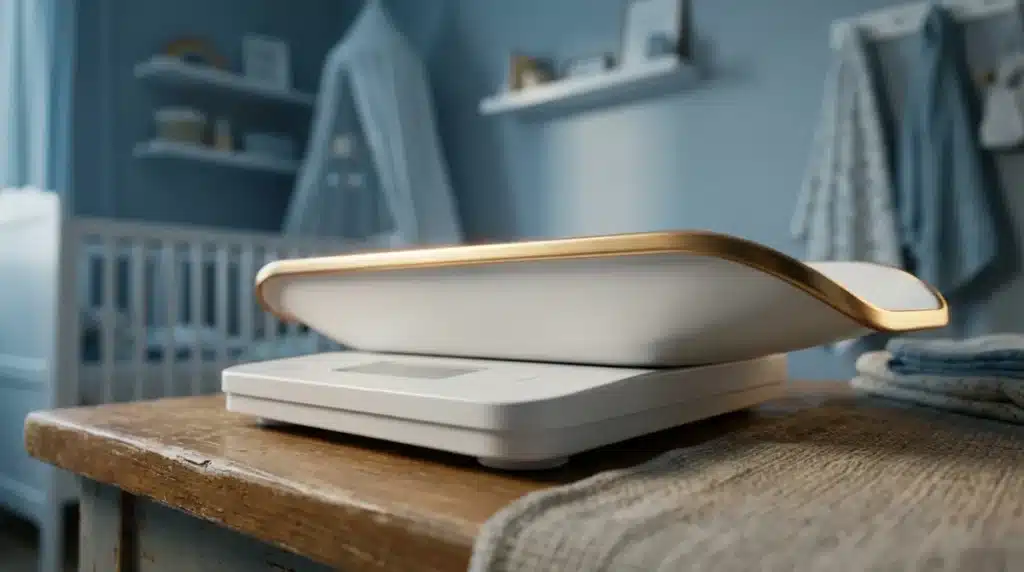
A baby scale isn't just a bathroom scale with a different label. Most are built around a wide, shallow tray or basin rather than a flat platform — deep enough to keep a lying-down infant secure, but low enough to lift them in and out easily. Capacity typically runs 15-20kg (33-44lb), well past a newborn's weight, so the scale keeps working as your baby grows into toddlerhood.
Resolution is where knowing how to calibrate a baby scale really pays off: clinical guidance calls for reading infant weight to the nearest 0.01kg (10 grams), far finer than a bathroom scale needs to bother with. Some home models read even finer than that. That precision only means something, though, if the scale is actually calibrated to back it up.
How to Calibrate a Baby Scale: Why Accuracy Matters So Much
This is the part most scale guides skip, and it's the actual reason to care about calibrating this specific scale properly.
Infant weight isn't just a number — it's plotted against the WHO Child Growth Standards and CDC growth charts, the standardized curves pediatricians use to track weight-for-age and catch problems early: poor weight gain, dehydration, or growth patterns that need attention. Clinical protocols for infant scales define an acceptable calibration tolerance of about ±0.01kg (±10 grams) around a known reference weight. Beyond that margin, an error is considered large enough to potentially distort how a measurement reads against those charts.
This is exactly why how to calibrate a baby scale correctly matters so much: a healthy infant might gain 200-300 grams between visits. A scale running just 100-150 grams heavy or light — invisible without a calibration check — can make a genuinely healthy gain look worryingly small, or mask a real problem entirely. That's not a hypothetical; it's exactly the kind of silent, systematic error calibration exists to catch, on exactly the scale where it matters most.
Knowing how to calibrate a baby scale properly doesn't mean you need a hospital-grade instrument at home. It means the five minutes a calibration check takes are worth more here than almost anywhere else you'd spend them.
How to Calibrate a Baby Scale, Step by Step
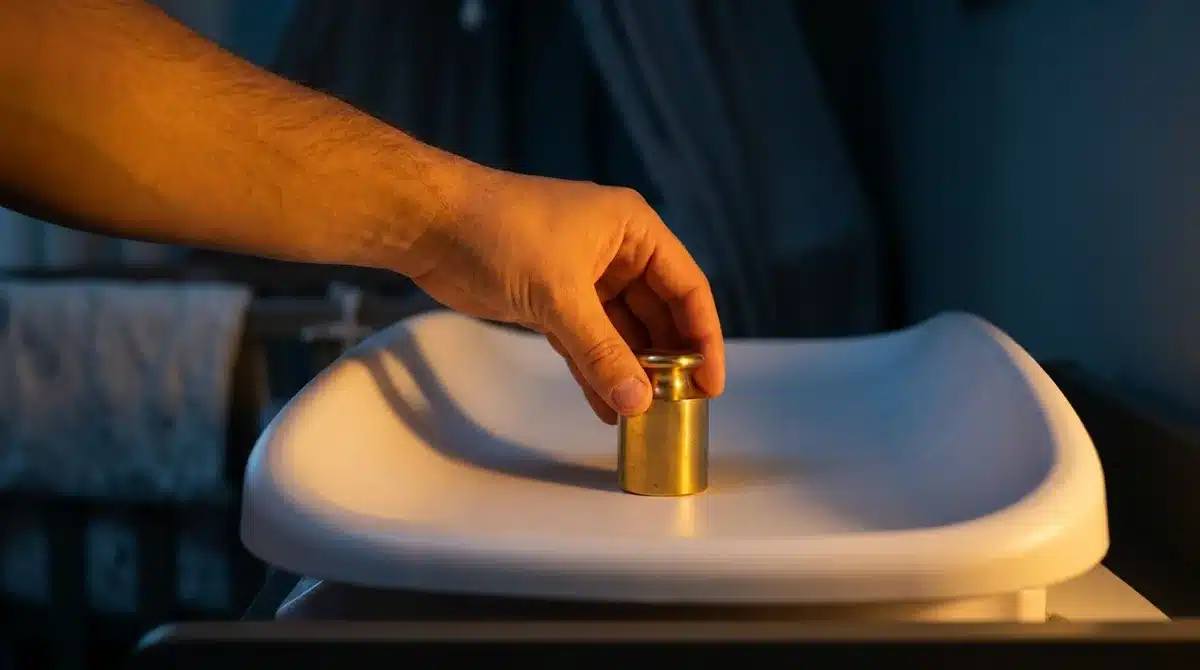 Center the weight on the tray and give the reading time to settle before expecting a result.
This is how to calibrate a baby scale in practice — the general process most digital baby scales follow — check your specific model's manual for exact button names, since MODE, CAL, and TARE labels vary slightly between brands.
- Prepare the tray. Remove it, clean it, and put it back in place. Set the scale on a flat, stable, draft-free surface.
- Power on and let it stabilize. Turn the scale on with the tray empty and leave it undisturbed for 60 seconds before doing anything else — digital load cells need a moment to settle after power-up.
- Zero the empty tray. Press TARE so the display reads a clean 0.00.
- Enter calibration mode. Press and hold MODE or CAL (whichever your model uses) until the display shows CAL and flashes the weight it wants.
- Place the calibration weight. Put the exact requested weight in the center of the tray and wait for the reading to settle.
- Confirm PASS, then verify. Once PASS appears, double-check by removing and re-weighing the same reference object — it should read the same value both times.
If your scale doesn't show PASS, or the second check doesn't match, start over from step 1 rather than trying to nudge the result — a rushed recalibration is often worse than the drift it was meant to fix.
How to Calibrate a Baby Scale: What Weight to Use
Part of how to calibrate a baby scale correctly is knowing what your scale actually asks for, since it varies by model and price point. Some consumer baby scales request a modest reference in the 1-2kg range; clinical-grade infant scales often use a two-point calibration with heavier references, sometimes 5kg or more. Always trust what your own display shows over any general guide.
If you have a certified calibration weight matching that value, use it — that's the most reliable option, full stop.
If you don't, a factory-sealed 1kg bag of sugar is a genuinely practical substitute for scales requesting a 1kg reference — sealed retail packaging is reasonably close to its labeled weight, and it costs nothing extra if you already buy sugar. For a lighter check, what weighs 1 kilogram covers other household items that land close to this exact reference, including why a liter of water is the most precise version of this trick.
For anything closer to true precision — if you're tracking a preterm infant's weight closely, or a pediatrician has flagged a concern — a real certified calibration weight removes the guesswork a household substitute can't.
How to Calibrate a Baby Scale Without Weights: How Accurate Are Substitutes
Worth being honest about when you calibrate a baby scale without certified weights, since not all "known weight" tricks are equally trustworthy:
| Substitute | Real-world accuracy | Best use |
|---|---|---|
| US nickels (20 = ~100g) | Very close — nickels are minted to an exact 5.000g spec | Small reference checks only; impractical at kg-scale weights |
| Factory-sealed 1kg sugar/flour bag | Good for home use — typically within a few grams of label | The most practical substitute for a 1kg calibration target |
| Loose or opened food packaging | Unreliable — moisture loss and scooping change the true weight | Avoid for calibration; fine for cooking |
| Generic dumbbell/gym plates | Often off by 1-2% (10-20g per kg) | Not recommended — too imprecise for this purpose |
| Certified calibration weight | Documented tolerance, the real answer | Whenever precision genuinely matters |
The takeaway: a sealed bag of sugar earns its reputation as a real substitute, while a gym weight plate — despite feeling more "official" — is often the least trustworthy option on this list.
After You Calibrate a Baby Scale: Tracking Growth Trends at Home
Here's a genuinely reassuring point about how to calibrate a baby scale for everyday use: for tracking a baby's growth trend day to day, consistency matters more than lab-grade precision.
If your scale is calibrated once and then used the same way every time — same time of day, same scale, same conditions, ideally with the baby undressed or in the same light clothing — small week-to-week changes stay meaningful even if the scale's absolute accuracy isn't perfect. A scale that reads a consistent 50 grams heavy every single time still shows you a real, trustworthy trend, even though any single reading is technically off.
What calibration actually protects you from is a scale that drifts inconsistently — accurate one week, off the next — because that's what turns a real trend into noise you can't interpret. That's the whole reason a periodic calibration check matters more than obsessing over any one reading.
How to Calibrate a Baby Scale: Signs You Need to Do It Again
A few practical warning signs that it's time to calibrate a baby scale again, worth checking for even between scheduled calibration checks:
- A weight-gain trend that suddenly looks off. If your baby has been steadily gaining and a reading suddenly shows a large unexplained jump or drop, check the scale against a known weight before assuming the number itself.
- A reading that doesn't match the pediatrician's office. Some difference is normal (different scale, different time of day, clothing), but a consistent, large gap between home and clinic readings is worth investigating.
- The scale was recently moved, dropped, or had its battery changed. Any of these can shift calibration even without visible damage — treat them as automatic triggers for a recheck.
- It's been longer than a month since the last check. Regular use without periodic verification is exactly how drift goes unnoticed.
None of these guarantee a problem, but they're the moments worth spending five minutes on a calibration check rather than assuming everything's fine.
Troubleshooting How to Calibrate a Baby Scale
- Scale won't hold zero. This is usually the first step people get wrong in how to calibrate a baby scale — check for drafts, vibration, or debris under the tray. Power cycle and re-zero on a stable surface.
- Calibration keeps failing. Confirm your substitute weight is genuinely close to the requested value — a container of sugar that's been opened and scooped from won't be reliable anymore.
- Readings drift over a single weigh-in. Let the baby settle for a few seconds before reading the display; movement on the tray causes real-time fluctuation that isn't a calibration problem.
- Display shows an error instead of a weight. Check you haven't exceeded the scale's rated capacity, and that the tray is seated correctly.
Common Mistakes When You Calibrate a Baby Scale
- Forgetting the basic sequence. Every mistake below comes back to skipping a step in how to calibrate a baby scale properly — replace the tray, zero it, then calibrate.
- Skipping the 60-second warm-up. Calibrating immediately after power-on, before the load cell has settled, is a common cause of a check that seems to pass but doesn't hold.
- Using an opened or scooped food package as a weight reference. Once you've used some of it, the remaining weight is no longer close to the label — always use a sealed, unopened package.
- Placing the weight off-center. Even a small offset from the tray's center can introduce error during calibration — center it carefully.
- Assuming the scale is fine because "it looks right." Without a periodic check against a known weight, drift is invisible until you compare it to something real.
- Chasing perfect accuracy instead of consistency. For trend-tracking, a calibrated scale used the same way every time beats an uncalibrated one you're constantly second-guessing.
- Weighing at different times of day and comparing directly. Weight can genuinely fluctuate through the day with feeding and diaper changes — pick a consistent time, like right before a morning feed, for readings you intend to compare.
- Ignoring the manual's specific button names. MODE, CAL, ZERO, and TARE aren't universal across brands — if a step in this guide doesn't match your display, check your model's manual for the equivalent control before assuming something's broken.
Frequently asked questions
How to calibrate a baby scale without a calibration weight? Use a factory-sealed 1kg bag of sugar as a rough substitute if your scale requests a 1kg reference. It's not certified-precision, but it's reliable enough for tracking growth trends at home.
Why does calibration accuracy matter more for baby scales? Infant weight is plotted against WHO and CDC growth charts to track development and catch problems like poor weight gain. Clinical protocols treat errors beyond about 10 grams around a reference weight as significant enough to affect that interpretation.
How often should I calibrate a baby scale, and how do I know when it's time? Check it before any weigh-in where you're tracking a real trend, and at minimum monthly with regular use. Always recalibrate after moving the scale or changing the battery.
Are coins accurate enough when I calibrate a baby scale? For a small reference check, yes — 20 US nickels weigh almost exactly 100 grams. For the larger reference weights most baby scales actually request (often 5kg or more), coins aren't practical, and a household substitute or certified weight is the better option.
What's more important: perfect accuracy or consistency? For tracking a baby's growth trend at home, consistency matters more than lab-grade precision — which is part of why how to calibrate a baby scale correctly, and stick to that routine, matters more than chasing a perfect single reading.
Can I use my bathroom scale instead of a dedicated baby scale? Not reliably for a young infant — bathroom scales aren't built to resolve the small weight changes that matter most in early infancy, and holding a baby while standing on one introduces its own error. A dedicated baby scale with a proper tray is worth it if you're tracking growth closely.
Does the type of baby scale (mechanical vs. digital) change the calibration process? Yes — how to calibrate a baby scale differs by design: older mechanical beam-style infant scales calibrate by adjusting a sliding counterweight against a reference mass, not through a button-based digital CAL mode. This guide covers digital scales specifically, which are what most home and modern clinical settings use today.
Should I weigh my baby with or without clothes on? For tracking a genuine trend, pick one approach and stay consistent — undressed (or in just a diaper) is the most common clinical practice, since clothing weight varies and can mask small real changes. Whatever you choose, keep it the same every time.
Is a small, consistent offset on my scale actually a problem? Not really, for trend-tracking purposes — a scale that's always exactly 50g heavy still shows true week-to-week changes accurately, since the offset cancels out when you compare one reading to the next. The real risk is a scale that drifts inconsistently, which calibration checks exist to catch.
Related Guides
Now that you know how to calibrate a baby scale, here are related references worth bookmarking:
- What Weighs 1 Kilogram — scalecalibration.net/what-weighs-1-kilogram/ — everyday references for the most common baby-scale calibration target.
- How to Calibrate a Digital Scale — scalecalibration.net/how-to-calibrate-a-digital-scale/ — the general method behind every digital scale calibration.
- Calibration Weights: Which Class & Size — scalecalibration.net/calibration-weights/ — for genuine certified-precision checks.
- How to Calibrate a Digital Pocket Scale — scalecalibration.net/how-to-calibrate-digital-pocket-scale/ — has the coin calculator and accuracy tester tools.