By Jayson · Updated August 2026 · 8-minute read
Quick answer: Weighing scale verification UK isn't one single process — it's two distinct legal events under SI 2016/1152. Verification is what happens to a new trade scale before it's ever used. Requalification is what happens afterward, specifically when a disqualification mark has been applied under regulation 67, usually after repair, adjustment, or damage. There's no annual calendar requirement. The trigger is an event, not a date, and once disqualified, a scale can't legally be used for trade again until a requalification authority is satisfied it complies and affixes a requalification mark.
Our NAWI Regulations UK guide covers SI 2016/1152's overall structure. This one goes deep on one specific piece of it: what weighing scale verification UK actually means once a scale is already in service — what happens when it fails, gets repaired, or otherwise needs checking again before it can legally set a customer's price.
In this guide
- What weighing scale verification UK actually means
- Disqualification: regulation 67
- Requalification: regulation 68
- Who can carry out weighing scale verification UK work
- Approved verifier vs. UKAS accreditation
- Is weighing scale verification UK required on a calendar?
- What happens when Trading Standards finds an out-of-tolerance scale
- Verify this yourself: official sources
- Common mistakes
- FAQ
What Weighing Scale Verification UK Actually Means
Weighing scale verification UK covers two ideas that get used interchangeably in casual conversation, but SI 2016/1152 treats them as genuinely different legal steps.
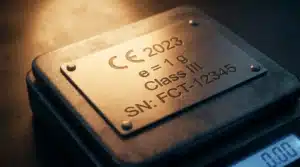
Verification is the conformity-assessment step a new instrument goes through before it's placed on the market and put into service for trade, tied to its markings and the conformity assessment routes covered in our NAWI Regulations UK guide. It's the front door.
Requalification is what happens afterward, specifically after a disqualification event under regulation 67. It's not a general checkup — it's the specific legal process that restores a scale's right to be used for trade once something has called that right into question.
The regulations don't use phrases like "as found" and "as left" testing in those exact words, but the practical shape of weighing scale verification UK follows the same familiar pattern used across calibration generally: the instrument gets examined in its current state, corrected if it needs it, then re-tested to confirm it actually complies before anyone applies a mark.
Disqualification: Regulation 67
The first stage of weighing scale verification UK enforcement is disqualification. Regulation 67, titled "Disqualification," sits in Part 8 of SI 2016/1152, the Part covering market surveillance and enforcement. An inspector can affix a disqualification mark to a regulated instrument when:
- The instrument no longer conforms to its essential requirements.
- The instrument no longer conforms to its type examination certificate.
- Adjustment, alteration, addition, repair, or replacement suggests the instrument may no longer comply.
- Required markings or identifications are missing entirely.
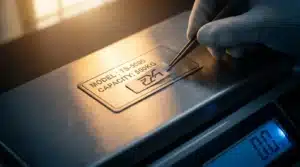
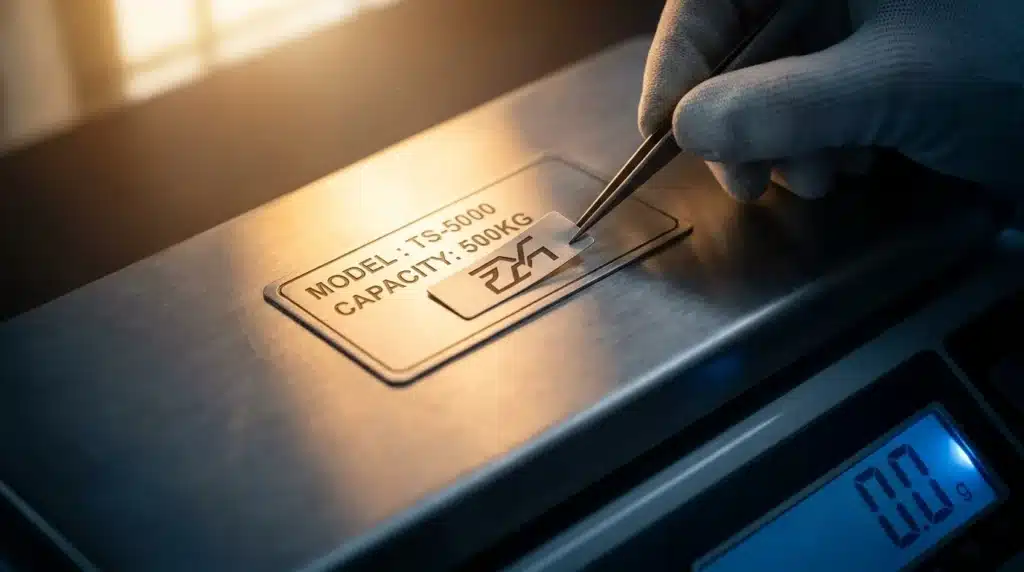
The mark itself has a specific placement rule: it must be affixed where it's clearly visible when the instrument is in its normal operating position. Since 2021, the regulations also allow the mark to be applied as a label, provided the label is clear, legible, and indelible — a real, physical sticker on the scale, not a hidden internal flag or a paperwork-only status.
Once a disqualification mark is on a scale, using it for any of the regulated purposes in regulation 3(2) is itself an offence, unless the scale has since gone through the second stage of weighing scale verification UK: requalification.
Requalification: Regulation 68
The second stage of weighing scale verification UK is requalification, governed by regulation 68, titled "Re-qualification." It applies in three situations: a disqualification mark has been affixed under regulation 67, a notice has been served under regulation 67(4), or an instrument should have received a disqualification mark under the circumstances but didn't.
A requalification authority can affix a requalification mark only once satisfied the instrument complies with its essential requirements, its applicable type examination certificate, and the trade-use requirements set out in Schedule 4. That's a genuinely thorough bar — not a quick visual check, but confirmation the instrument actually meets the same technical standard it had to meet when it was first verified.
There's one specific, physical requirement worth knowing: the requalification mark must be affixed so that it obliterates, as far as possible, the disqualification mark it's replacing. In practice, a requalified scale doesn't carry both marks side by side — the new mark visibly supersedes the old one, so anyone reading the nameplate later sees the current status, not a confusing history of both.
Who Can Carry Out Weighing Scale Verification UK Work
Regulation 68 defines exactly who's legally allowed to carry out this side of weighing scale verification UK. A requalification authority is:
- An inspector.
- An approved verifier.
- An approved body for module F or F1 (referring back to the conformity assessment modules covered in our NAWI Regulations UK guide).
- A manufacturer operating an approved quality system under module D or D1.
That's a genuinely broader list than most people assume — it's not exclusively Trading Standards inspectors doing this work. A manufacturer with the right approved quality system, or a properly approved third-party verifier, can requalify a scale too, which matters a lot for a business trying to get equipment back into service quickly after a repair.
Approved Verifier vs. UKAS Accreditation
Approved verifier is one of four routes into weighing scale verification UK work, and it's a genuinely common point of confusion worth being precise about, especially since our UKAS Scale Calibration guide covers a related but distinct credential.
Approved verifier is a legal status granted by the Office for Product Safety and Standards (OPSS) under UK weights and measures law specifically. It authorises a person or company to carry out verification and requalification work under SI 2016/1152.
UKAS accreditation is a separate thing entirely — it's a laboratory's accreditation to ISO/IEC 17025, confirming general technical competence to carry out accurate calibration work. A UKAS-accredited lab is not automatically an approved verifier, and an approved verifier isn't automatically UKAS-accredited. They're two different credentials, granted by two different bodies, for two different (if related) purposes. A business buying either service should ask specifically which status the provider actually holds, rather than assuming one implies the other.
Is Weighing Scale Verification UK Required on a Calendar?
No. Weighing scale verification UK in Great Britain runs on an event-based trigger, not a calendar interval — this is worth stating plainly because it surprises a lot of business owners used to something like an MOT-style fixed schedule.
The trigger under SI 2016/1152 is event-based. A scale that's never been repaired, adjusted, or damaged since its original verification can, in principle, stay in legal service indefinitely without a fresh requalification. There's no statutory requirement for annual re-verification simply because time has passed.
That doesn't mean ignoring a scale for years is a good idea in practice. Plenty of UK businesses run their own internal periodic checks anyway, using certified calibration weights between the formal legal events, precisely because catching drift early avoids the disruption of a Trading Standards visit finding a problem first. A genuine example of where this matters: a busy butcher's counter scale weighing dozens of transactions a day accumulates real mechanical wear that a scale used twice a week never will, even though neither one has a legal obligation to be reverified on a fixed date. The law sets the floor; sensible maintenance is a separate, practical decision on top of it.
What Happens When Trading Standards Finds an Out-of-Tolerance Scale
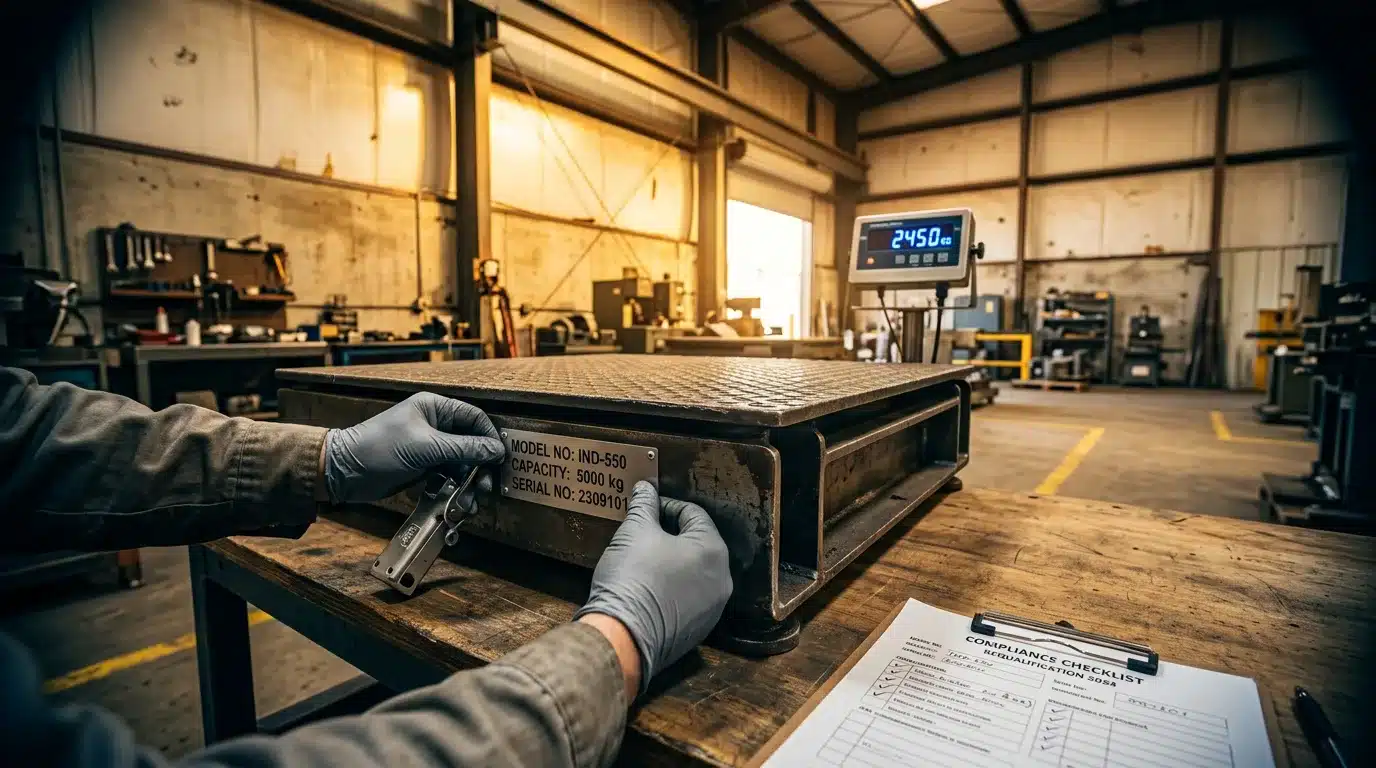 A disqualification mark stops a scale from legally being used for trade until a requalification authority is satisfied it complies again.
If an inspector examines a scale and concludes it meets the conditions in regulation 67, they can apply a disqualification mark on the spot. From that moment, the business has a clear practical obligation: stop using that specific instrument for anything covered by regulation 3(2), get the underlying fault fixed, and arrange requalification through a genuine requalification authority before putting it back into service.
Continuing to use a disqualified scale for trade is a separate offence in its own right, on top of whatever originally caused the disqualification — which is exactly why treating a disqualification mark as a formality to work around, rather than a hard stop, is a real legal risk, not just a compliance inconvenience.
Verify This Yourself: Official Sources
Legislation and enforcement guidance can change, and this guide reflects research current as of August 2026. Before relying on this guide for a weighing scale verification UK compliance decision, check directly with:
- legislation.gov.uk — Regulation 67, Disqualification — the full legal text governing disqualification marks.
- legislation.gov.uk — Regulation 68, Re-qualification — the full legal text governing requalification.
- Business Companion — Weighing equipment for legal use — official UK business-facing guidance covering markings in plain language.
See our site disclaimer for how we handle regulatory and standards content generally.
Common Weighing Scale Verification UK Mistakes
The most common mistakes businesses make about weighing scale verification UK:
- Assuming verification and requalification are the same process. Verification happens once, before first use. Requalification is specifically triggered by a disqualification event afterward.
- Assuming any calibration provider can requalify a disqualified scale. Only a genuine requalification authority — an inspector, an approved verifier, an approved body, or a manufacturer with the right approved quality system — can legally do it.
- Confusing approved verifier status with UKAS accreditation. They're separate credentials from separate bodies. Ask a provider which one they actually hold.
- Assuming there's a fixed annual re-verification deadline. There isn't. The legal trigger is an event, not a date on a calendar.
- Continuing to use a disqualified scale "just until the repair gets booked in." That's a separate offence, regardless of how minor the underlying fault seems.
- Not checking that a requalification mark actually obliterated the old disqualification mark. If both marks are still clearly visible together, that's worth a direct question to whoever did the work.
Frequently Asked Questions
What is weighing scale verification UK? Weighing scale verification UK is the legal system under SI 2016/1152 that confirms a trade scale complies before first use, and requalifies it afterward whenever repair, damage, or missing markings raise doubt about that compliance.
What triggers scale requalification in the UK? A disqualification mark being affixed under regulation 67, a notice served under regulation 67(4), or an instrument that should have carried a disqualification mark but didn't. In practice, this means repair, adjustment, alteration, replacement, or missing or damaged markings — that's the core trigger behind weighing scale verification UK requalification specifically.
Is weighing scale verification UK required annually? No. The legal trigger under SI 2016/1152 is event-based, not a fixed calendar interval. A scale that's never been touched since its original marking can, in principle, stay in service indefinitely without a fresh requalification.
Who can apply a disqualification mark to a UK scale? An inspector, under regulation 67, when the instrument no longer conforms to its essential requirements or type examination certificate, or when required markings are missing.
What is a requalification authority? Under regulation 68, a requalification authority is an inspector, an approved verifier, an approved body for module F or F1, or a manufacturer operating an approved quality system under module D or D1.
Is an approved verifier the same as a UKAS-accredited lab? No. Approved verifier is a legal status granted by the Office for Product Safety and Standards under UK weights and measures law, separate from UKAS accreditation, which certifies a laboratory's general technical competence to ISO/IEC 17025.
What happens to the old disqualification mark when a scale is requalified? The requalification mark must be affixed so that it obliterates, as far as possible, the disqualification mark it's replacing.
More Scale Calibration Guides
- NAWI Regulations UK — scalecalibration.net/nawi-regulations-uk/ — the full statutory instrument this process sits inside.
- UK Weighing Scale Regulations — scalecalibration.net/uk-weighing-scale-regulations/ — the broader compliance picture.
- UKAS Scale Calibration — scalecalibration.net/ukas-scale-calibration/ — how UKAS accreditation differs from approved verifier status.
- Legal for Trade Scales UK — scalecalibration.net/legal-for-trade-scales-uk/ — which businesses need trade-approved equipment in the first place.
- Calibration Weights: Which Class & Size — scalecalibration.net/calibration-weights/ — certified weights for internal checks between formal events.