By Jayson · Updated July 2026 · 9-minute read
NIST calibration certificate cost: for a scale, published NIST calibration certificate cost typically runs from about $139 for a small bench-scale certificate up to $505–$579 for platform scales in the 1,000–3,000 lb capacity range, with larger or specialized industrial equipment costing more. The exact price depends on capacity, number of test points, accreditation level, and turnaround time.
If you're budgeting for scale calibration, weighing equipment, or lab instruments, understanding NIST calibration certificate cost helps you avoid surprises when the invoice arrives. This guide breaks down what actually drives the price, shows real published rates for scale calibration specifically, and covers practical ways to keep your calibration budget under control in 2026.
In this guide
- What is a NIST calibration certificate?
- What drives NIST calibration certificate cost
- Real NIST calibration certificate cost by scale capacity
- Factory vs. third-party calibration
- How weight class affects certificate cost
- How many accredited calibration labs are there?
- How to reduce your NIST calibration certificate cost
- How often you actually need to budget for recalibration
- Do you need one for a home or kitchen scale?
- Questions to ask before you pay
- FAQ
What Is a NIST Calibration Certificate?
A NIST calibration certificate documents that a scale or instrument was tested against reference standards traceable to the National Institute of Standards and Technology. This certificate is what regulators, auditors, and quality managers rely on to prove measurement accuracy — without it, many industries can't legally use their equipment for compliance-related work.
Importantly, a NIST calibration certificate is not the same thing as legal-for-trade approval. Certifying that a scale is accurate against a traceable reference is a separate step from the NTEP evaluation and state licensing that puts a commercial scale into service for buying and selling by weight — a distinction worth confirming with your provider before you assume one covers the other.
What a NIST Calibration Certificate Actually Includes
Part of what you're paying for in NIST calibration certificate cost is the documentation itself, not just the technician's time on-site. A properly issued certificate typically shows:
- "As found" and "as left" readings — the scale's accuracy before any adjustment, and again after, so you can see whether it needed correcting at all.
- The specific test points used — the exact weights placed on the scale during the test, and the reading recorded at each one.
- The reference weights' own traceability chain — confirming the calibration weights used were themselves recently verified against a national standard, not just assumed accurate.
- A stated uncertainty, reflecting the real-world limits of precision at each test point, not a single flat "accurate" claim.
- A next-due date and the technician's signature or stamp, which is what an auditor actually checks first.
A certificate missing any of these is doing less than the price implies — worth confirming before you pay, not after.
What Drives NIST Calibration Certificate Cost
NIST calibration certificate cost is not a flat industry fee. Several variables determine what you actually pay:
- Scale capacity and instrument type. A small bench scale and a multi-ton platform scale require entirely different test procedures and reference weights.
- Number of calibration points. More test points across a measurement range increase labor time and, with it, price.
- Accreditation level. Labs holding ISO 17025 accreditation often charge more, reflecting the stricter documentation and audit trail behind the certificate.
- Turnaround time. Rush service usually adds a premium to the base price.
- Reference standards used. Labs using higher-class certified calibration weights and traceable references pass that cost into the certificate fee.
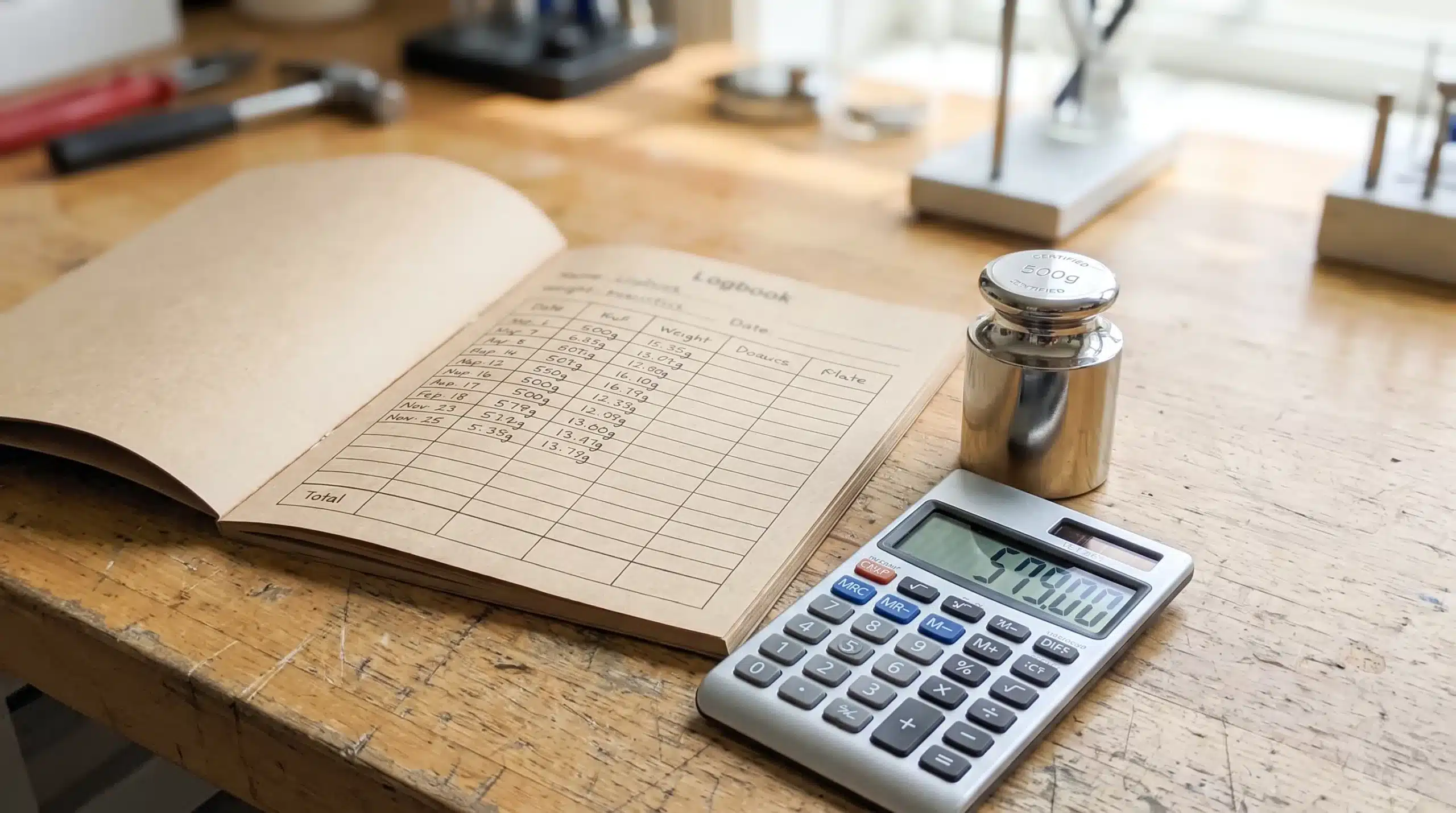 NIST calibration certificate cost scales with capacity, test points, and accreditation level — not a single flat industry rate.
Real NIST Calibration Certificate Cost by Scale Capacity
Published pricing from an actual scale calibration provider gives a useful, on-topic benchmark for what NIST calibration certificate cost looks like in practice. Scales Plus, a scale dealer and service provider, publishes the following certificate pricing:
| Certificate Type | NIST Calibration Certificate Cost |
|---|---|
| Standard certificate (small bench/counting scales, no capacity test) | $139 |
| Up to 1,000 lb capacity test | $505 |
| Up to 2,000 lb capacity test | $545 |
| Up to 3,000 lb capacity test | $579 |
Source: Scales Plus NIST traceable calibration certificate pricing, verified 2026. Prices vary by provider and region — treat these as a real-world benchmark, not a universal rate.
Each tier includes corner/quadrant shift tests on the scale base, load tests at the center of the platform, tolerance verification, and a documented "as found and as left" report — the actual technical work behind the certificate, not just a printed page. Larger or more specialized industrial equipment — high-capacity truck scales, lab balances requiring many test points, or equipment with tight custom tolerances — commonly costs more than the ranges above.
Worth noting: NIST calibration certificate cost varies enormously across instrument categories, not just scale capacity. Specialized environmental and meteorological sensors — wind tunnels, barometric references, temperature baths — can run several hundred to over a thousand dollars per certificate due to the specialized test rigs involved. That figure is real for those instruments, but it isn't a useful benchmark if what you're actually budgeting for is scale or balance calibration — the pricing above is the number that applies to this site's audience.
NIST Calibration Certificate Cost: Lab Balances vs. Industrial Scales
Capacity isn't the only thing that moves NIST calibration certificate cost — precision requirements pull in the opposite direction from raw size, and it's worth understanding both:
- Lab and analytical balances are physically small and don't need heavy reference weights, but they demand far tighter tolerances (often to the milligram) and stable environmental conditions — no drafts, vibration, or temperature swings during the test. That precision, not the balance's size, is what keeps their certificate cost meaningful even for a low-capacity instrument.
- Industrial and platform scales need larger, heavier reference weights physically moved onto the platform, and often require testing at multiple points across a wide capacity range — more labor, more equipment, and in many cases an on-site visit rather than a bench test in a lab. That logistical overhead is what pushes their NIST calibration certificate cost up as capacity climbs, as seen in the pricing tiers above.
A quick gut-check when a quote looks unusually low: ask how many test points it covers and whether the reference weights match the accuracy class your scale actually needs. A cheap certificate that skips test points or uses the wrong weight class isn't a bargain — it's an incomplete one.
Factory vs. Third-Party Calibration
Manufacturers often offer factory calibration directly, while independent labs provide third-party calibration services. Both paths can produce a valid NIST-traceable certificate, but pricing structures differ — factory calibration sometimes bundles the certificate with equipment maintenance, while third-party providers may price each service line separately.
Choosing between them usually comes down to turnaround time and whether your industry requires a specific accreditation body. Our scale calibration overview covers how these pathways fit into the bigger picture of keeping a scale in tolerance, including how tolerance standards determine whether an adjustment is actually needed.
How Weight Class Affects Certificate Cost
The reference standards a lab uses directly influence NIST calibration certificate cost. Labs relying on higher-class weights — OIML Class F1 or ASTM Class 1 — typically charge more, because those standards require stricter maintenance and more frequent recertification of the reference weights themselves. See our OIML weight classes explained and ASTM weight classes explained guides for how that grading works.
Brass, stainless steel, and cast iron weights all serve different calibration scenarios. Our calibration weights guide covers slotted sets, trade-stamped weights, and milligram weights used in laboratory settings, if you're sourcing your own reference standards rather than relying entirely on a provider's.
How Many Accredited Calibration Labs Are There?
Pricing varies significantly because there's real competition in the market. By one aggregated count across the major US accreditation bodies (A2LA, ANAB, NVLAP, and others), well over 1,600 ISO/IEC 17025-accredited calibration labs currently operate in the United States. That's enough genuine competition that comparing quotes, rather than accepting the first one, is usually worth the extra phone call.
Before committing to a provider, ask whether their quoted NIST calibration certificate cost includes travel fees, retesting if a scale fails on the first pass, or expedited service — these line items are exactly where a quote that looked competitive on paper can grow after the fact.
How to Reduce Your NIST Calibration Certificate Cost
There are practical ways to manage NIST calibration certificate cost without cutting corners on accuracy or compliance:
- Bundle multiple instruments with one provider to reduce per-unit service fees.
- Schedule calibrations in advance to avoid rush fees during peak testing seasons.
- Track calibration cycles so instruments are serviced only when due, not early — calibration management software automates this instead of relying on a shared spreadsheet or a filing cabinet.
- Compare accredited labs rather than defaulting to the first quote you receive.
- Confirm what's included before you book — travel fees and retesting can turn an attractive quote into the most expensive one.
How Often You Actually Need to Budget for Recalibration
NIST calibration certificate cost isn't a one-time line item — it's a recurring one, and how often you budget for it depends on the equipment and the stakes riding on its accuracy. Most industrial and laboratory instruments need recalibration annually as a baseline, though usage intensity and tolerance requirements can shorten that window considerably.
A scale running multiple shifts a day in a warehouse wears differently than one used occasionally in a small lab, and equipment tied to a strict regulatory tolerance (pharmaceutical dosing, precious metals, legal-for-trade retail) often needs more frequent checks than the annual default. Always budget for an unscheduled recalibration after a scale is moved, dropped, serviced, or shows readings that suddenly look off — waiting for the next annual cycle to catch a real problem is how out-of-tolerance equipment slips through unnoticed.
Do You Need a NIST Calibration Certificate for a Home or Kitchen Scale?
Not every reader budgeting for calibration is running a regulated facility. If you just want to check a kitchen or postal scale at home, a formal NIST calibration certificate is more than you need — our how to calibrate a digital scale guide covers the DIY process, and a US nickel weighs exactly 5.000 grams, making it a genuine rough reference for a quick accuracy check. See how much does a nickel weigh.
NIST calibration certificate cost only becomes a real budget line when a reading has to hold up to a regulator, an auditor, or a customer contract — know which situation you're in before paying for a certificate you don't need.
Questions to Ask Before You Pay for a NIST Calibration Certificate
Before you agree to a quote, a short list of questions can save you from an unpleasant surprise on the final invoice — and make sure the NIST calibration certificate cost you're quoted actually reflects the work being done:
- Does the price include travel, or is that billed separately for on-site calibration?
- What happens if the scale fails on the first pass — is a retest included, or does that trigger a second charge?
- Which accreditation body covers this lab, and does their scope actually include your instrument type and capacity?
- How many test points are included, and do they match the accuracy class your equipment actually needs?
- What's the turnaround time, and is rush service available if you need it sooner?
A provider who answers all five clearly and consistently is usually the one whose quoted NIST calibration certificate cost will match what actually shows up on the invoice — the ones who hedge on any of these are the ones worth asking more questions of, not signing with immediately.
Frequently Asked Questions
How much does a NIST calibration certificate cost for a scale?
Published pricing from a real scale calibration provider shows a standard certificate for a small bench scale at $139, rising to $505 for scales up to 1,000 lb, $545 up to 2,000 lb, and $579 up to 3,000 lb capacity. Larger or specialized industrial equipment typically costs more.
Why does NIST calibration certificate cost vary so much between labs?
Cost varies with instrument capacity and complexity, the number of test points required, whether the lab holds ISO/IEC 17025 accreditation, turnaround time, and the class of reference weights used. Two labs calibrating the same scale can reasonably charge different amounts.
Does a NIST calibration certificate mean my scale is legal for trade?
No. A NIST calibration certificate documents that the scale was tested against NIST-traceable reference standards, but it does not place an NTEP scale into legal-for-trade service — that requires separate state weights and measures licensing.
Is third-party calibration cheaper than factory calibration?
Often yes, though not always — third-party providers can be competitively priced, but accreditation scope and turnaround time matter as much as the sticker price. Compare quotes from more than one provider rather than defaulting to the first one.
How can I reduce my NIST calibration certificate cost?
Bundle multiple instruments with one provider, schedule calibrations in advance to avoid rush fees, track calibration cycles so equipment is serviced only when due, and compare accredited labs instead of accepting the first quote.
Do I need a NIST calibration certificate for a home or kitchen scale?
No. NIST calibration certificates matter for commercial, laboratory, and regulated equipment where a reading has to hold up to an auditor or regulator. A home or kitchen scale can be checked with a US nickel (5.000 grams) or a basic calibration weight instead.
What's actually included in a NIST calibration certificate?
A properly issued certificate shows "as found" and "as left" readings, the specific test points used, the reference weights' own traceability chain, a stated measurement uncertainty, and a next-due date with the technician's signature. A certificate missing these details is doing less than the price implies.
How often should I budget for NIST calibration certificate cost?
Most industrial and laboratory equipment needs recalibration annually as a baseline, though heavy usage or strict regulatory tolerances can shorten that window. Always budget for an unscheduled recalibration after a scale is moved, dropped, serviced, or starts giving readings that look off.
More Related Guides
- ISO 17025 Accreditation: A Buyer's Guide — scalecalibration.net/iso-17025-accreditation-a-buyers-guide/ — why accreditation level affects certificate price and trust.
- Calibration Management Software — scalecalibration.net/calibration-management-software-5-best-tools/ — the platforms that automate tracking calibration due dates and certificates.
- Calibration Weights: Which Class & Size — scalecalibration.net/calibration-weights/ — the reference standards behind every certificate.
- OIML Weight Classes Explained — scalecalibration.net/oiml-weight-classes/ — how weight-class grading affects cost.
- How to Calibrate a Digital Scale — scalecalibration.net/how-to-calibrate-a-digital-scale/ — the everyday process for scales that don't need a certificate.