By Jayson · Updated July 2026 · 9-minute read
Best floor scale for warehouse use: for facilities facing real temperature extremes, the Micro-Tess Stainless Steel Electronic Platform Scale (-20°C to +65°C, IP68) has the widest verified operating range. The LW Measurements BWS/BW NTEP series (-10°C to 40°C) covers standard heated-to-cold-storage conditions at a lower price, and the Intelligent Weighing TitanH 200-16 ($904, IP67) suits wet washdown environments like food processing docks.
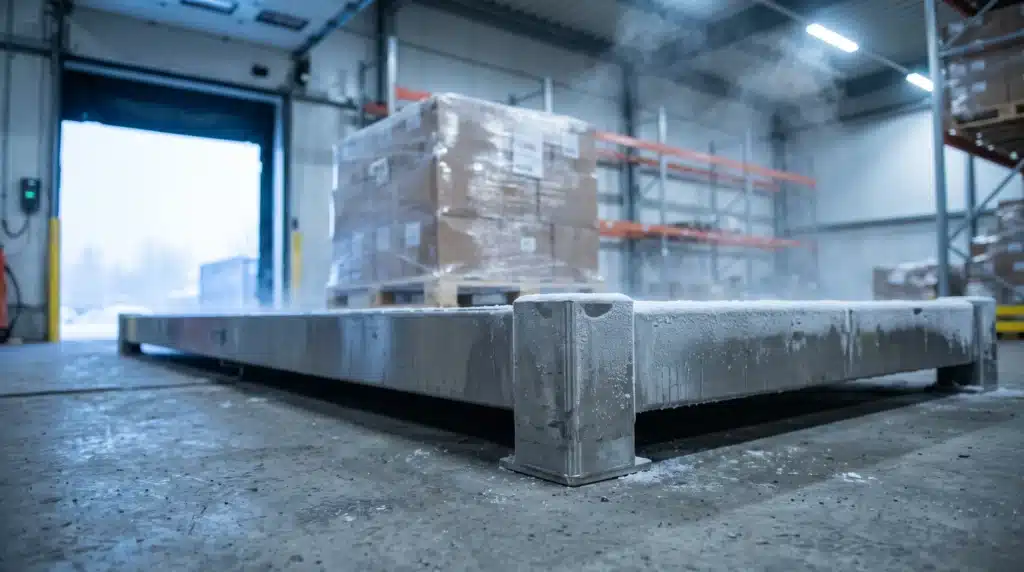
A scale that fails in the cold or drifts in the heat isn't just an inconvenience — it's a direct threat to shipping accuracy, billing, and customer trust. Unheated distribution centers in northern climates regularly dip below freezing overnight; loading docks in the south can climb past 100°F by early afternoon in summer. Finding the best floor scale for warehouse conditions like these means looking past brand name to the two specs that actually matter: temperature range and protection rating.
This guide compares three real, independently verified models — each a genuine contender for the best floor scale for warehouse use in a demanding climate — by temperature tolerance, protection rating, and price, then covers why calibration matters even more once a scale is cycling through real seasonal extremes.
In this guide
- Why a warehouse floor scale needs to survive extremes
- What to look for before you buy
- Micro-Tess Stainless Steel Electronic Platform Scale
- LW Measurements BWS/BW NTEP series
- Intelligent Weighing TitanH 200-16
- Comparing the 3 models
- Why scale calibration matters more in extreme climates
- How to choose the best floor scale for warehouse use
- Do you need this level of protection?
- FAQ
Why a Warehouse Floor Scale Needs to Survive Extremes
If a floor scale isn't built to tolerate real temperature swings, its readings drift, its display lags, and its internal components wear out faster than the manufacturer intended. That's exactly why the best floor scale for warehouse use in a harsh climate deserves a closer look before you sign a purchase order, rather than defaulting to whatever's cheapest or most familiar.
Metal housings, load cells, and displays all respond to temperature differently, and a unit engineered for an office thermostat's range simply isn't built for a loading dock that swings 50+ degrees between January and August.
Real-World Warehouse Conditions: Why These Ratings Matter
The gap between a lab-tested spec sheet and an actual warehouse floor is where a lot of buyers get burned. The best floor scale for warehouse use on paper isn't always the best floor scale for warehouse use in your specific building, because the conditions that actually stress a scale vary a lot by facility:
- Unheated distribution centers in northern climates regularly sit below freezing overnight in winter, even with the building sealed.
- Loading docks with frequent door-open cycles see the widest, fastest temperature swings of any part of a warehouse — the scale sitting right at that threshold takes the brunt of it.
- Washdown and food-processing floors combine temperature swings with standing water and cleaning chemicals, which is a different stress test than dry cold storage.
- Outdoor-adjacent equipment, like a receiving scale near a dock door left open for forklift traffic, effectively experiences outdoor temperatures for hours at a time.
Matching the best floor scale for warehouse use to your actual conditions — not a generic "industrial-rated" label — is the difference between a scale that lasts years and one that starts drifting within a season.
What to Look For in the Best Floor Scale for Warehouse Use
Before comparing specific models, here's what actually separates the best floor scale for warehouse extremes from one that just says "industrial" on the box:
- A stated operating temperature range — not just "industrial-rated" marketing language, but an actual published number in °C or °F.
- An IP rating alongside it, not instead of it. IP67 or IP68 covers dust and moisture ingress — it says nothing about heat or cold tolerance on its own. You need both specs, not one standing in for the other.
- Overload protection — a scale rated for 150-200% overload survives an accidental pallet drop that a cheaper unit wouldn't.
- Resolution and stabilization time — how fine the readout is, and how fast it settles, both of which can shift slightly as the unit moves through its temperature range.
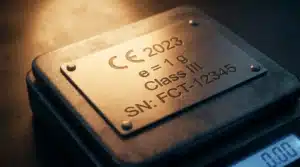
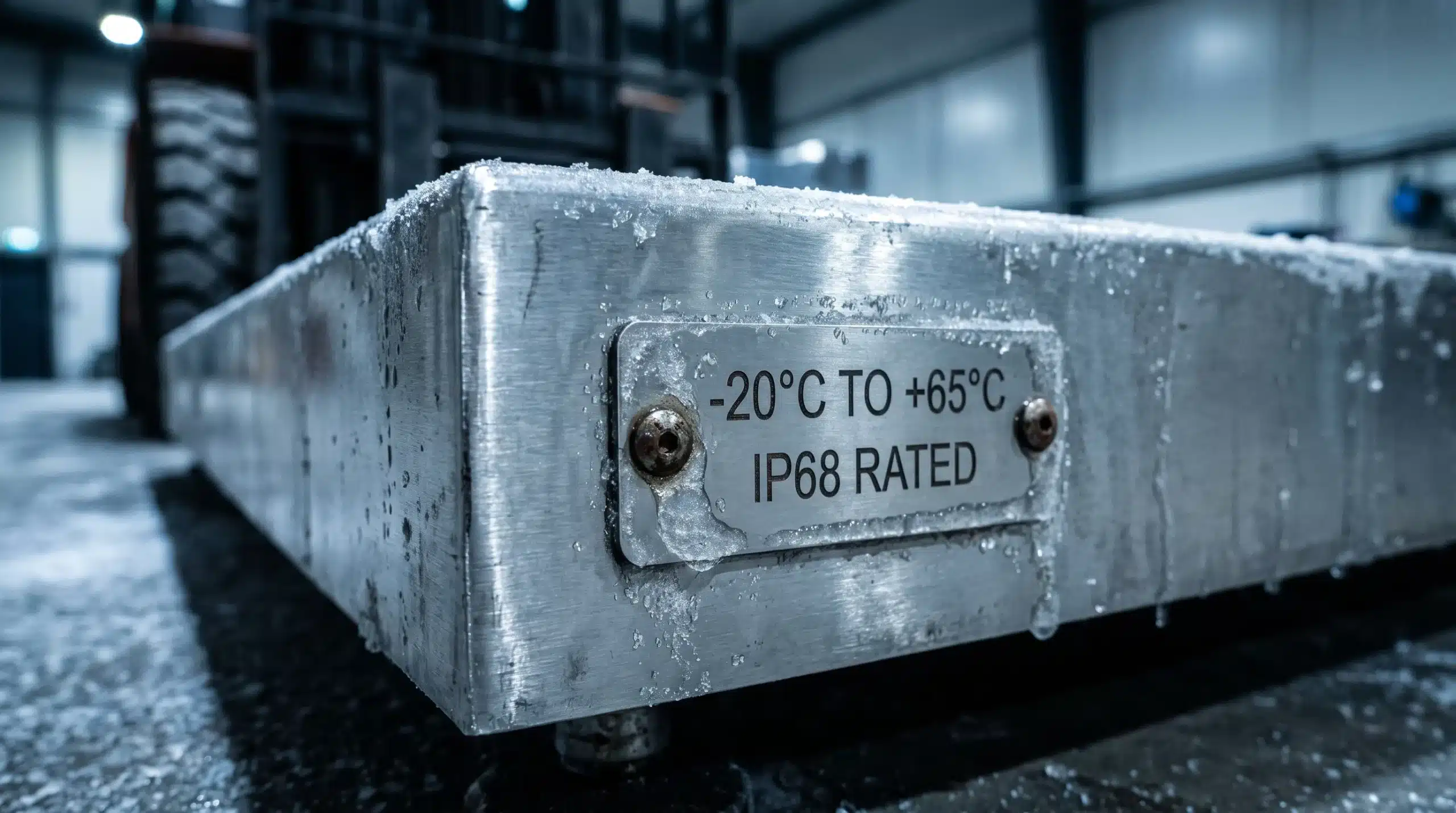 A genuine extreme-temperature rating is printed on the nameplate, not just claimed in marketing copy — always check for both the temperature range and the IP rating together.
Micro-Tess Stainless Steel Electronic Platform Scale
Of the three, the Micro-Tess Stainless Steel Electronic Platform Scale has the widest verified range: -20°C to +65°C, confirmed directly on Micro-Tess's own product page, with an IP68 rating on both the instrument and sensor housing. That combination — sealed electronics plus a genuinely wide temperature window — makes it the strongest candidate for the best floor scale for warehouse facilities with real Arctic-adjacent winters or scorching summer loading bays.
The unit ships with four welded, sealed high-precision single-shear-beam stainless steel load cells and a dust-sealed housing, with overload protection and upper/lower limit alarms built into the display. For washdown environments or humid cold-storage rooms specifically, this is the closest thing to a purpose-built answer among the three.
LW Measurements BWS/BW NTEP Series
The BWS/BW series from LW Measurements is rated for -10°C to 40°C (14°F to 104°F), per the manufacturer's published specifications — a narrower window than the Micro-Tess unit, but one that comfortably covers standard cold-storage rooms and heated warehouse floors without a premium price tag. The indicator supports resolution up to 1:30,000 depending on configuration, and the platform uses a separate tilt-and-swivel indicator head mounted apart from the weighing surface, common across the BW/BWS product family.
For facilities that see genuinely cold mornings and hot afternoons but never approach true Arctic conditions, this series is a reasonable middle ground for the best floor scale for warehouse buyers on a tighter budget — NTEP-approved, well-documented, and priced below the fully sealed stainless option above.
Intelligent Weighing TitanH 200-16
The TitanH 200-16 is an NTEP Class III bench scale with an IP66-rated base and an IP67-rated indicator, confirmed directly on Scales Plus's listing at $904.00 (marked down from a $996.05 MSRP as of 2026 — pricing can shift over time and by retailer). It stabilizes in under 2 seconds at 200 lb × 0.05 lb capacity/readability, on a 16"×16" stainless steel platform.
The IP67 indicator rating makes it a strong fit for wet environments — food processing warehouses, washdown stations — where hosing down equipment is part of the daily routine, rather than an occasional deep clean. For that specific use case, it's a genuine contender for the best floor scale for warehouse operations that prioritize moisture resistance over sub-zero temperature tolerance.
Verifying Specs Before You Buy
All three temperature ranges, IP ratings, and the TitanH's $904 price above were checked directly against the manufacturer's or retailer's own published pages before this guide was written, rather than repeated secondhand from another article. That step matters more than it sounds: a generic AI-written comparison of "the best floor scale for warehouse use" can plausibly invent a temperature spec or price that reads convincingly but doesn't match the real product — the only way to catch that is checking the source directly, which is exactly what separates a trustworthy buying guide from one that just sounds authoritative.
Comparing the 3 Models
| Model | Temperature Range | Protection Rating | Notable Feature |
|---|---|---|---|
| Micro-Tess Stainless Steel Electronic Platform Scale | -20°C to +65°C | IP68 | Sealed electronics, overload protection |
| LW Measurements BWS/BW NTEP series | -10°C to 40°C (14°F–104°F) | NTEP approved | Up to 1:30,000 resolution |
| Intelligent Weighing TitanH 200-16 | Standard indoor range | IP66 base / IP67 indicator | Sub-2-second stabilization, $904 |
Choosing the best floor scale for warehouse conditions ultimately comes down to your specific climate and how wet or dry your floor tends to be — the widest temperature range isn't automatically the right pick if your facility never sees true extremes and a washdown-rated unit would serve you better.
Why Scale Calibration Matters More in Extreme Climates
Owning the best floor scale for warehouse conditions solves half the problem — keeping it accurate as it cycles through real temperature swings is the other half. Metal expands when hot and contracts when cold, and even a scale rated for a wide range can drift slightly as it moves through that range multiple times a day.
Truck scales deserve a specific mention here, since they sit outdoors fully exposed to every seasonal swing a facility experiences. On-site calibration is usually the more practical option for large warehouse equipment, since a technician tests the unit under its actual operating temperature and load conditions rather than a controlled lab environment that may not reflect what the scale actually faces on your dock.
Every calibration event depends on a trustworthy physical reference traceable to NIST — see our calibration weights guide for choosing the right class, and OIML weight classes explained for how that grading works. If your facility runs enough instruments to need scheduling help, calibration management software tracks due dates and certificates instead of relying on a shared spreadsheet, and NIST calibration certificate cost breaks down real pricing by capacity. For facilities in regulated industries, ISO 17025 accreditation is worth understanding before you sign a service contract.
How to Choose the Best Floor Scale for Warehouse Use
Selecting the best floor scale for warehouse conditions gets easier once you know which specs actually matter:
- Confirm the published temperature range covers your facility's actual seasonal extremes, not a national average.
- Check for an IP67 or IP68 rating alongside the temperature spec — heat resistance and moisture resistance are two different things.
- Look for overload protection of at least 150–200% to survive accidental impacts.
- Ask your calibration provider how often the unit will need on-site calibration once installed, especially if it sits near a dock door.
- Budget for certified calibration weights as an ongoing cost, not a one-time purchase.
If your operation also handles shipping specifically, our how to calibrate a shipping scale guide covers the maintenance side once the right unit is installed.
None of these five points require guessing — every one of them is printed on a real spec sheet or nameplate, which is exactly why the best floor scale for warehouse conditions should always be chosen from a verified data sheet, not a sales pitch. If a vendor can't produce the actual temperature-range and IP-rating documentation for a specific model, that's worth treating as a red flag rather than an oversight.
Do You Need This Level of Protection?
Not every business weighing things at scale — pun aside — needs an IP68-rated, -20°C-capable platform scale. If you're running a small operation with a bench or postal scale indoors at normal room temperature, the extreme-temperature specs in this guide are more than you need; our how to calibrate a digital scale guide covers the basics for equipment that never faces real environmental extremes.
This level of investment makes sense specifically when a scale sits near a dock door, in unheated storage, or in a washdown environment — situations where the best floor scale for warehouse use genuinely needs to survive conditions a standard commercial scale was never designed for.
Conclusion
There's no single best floor scale for warehouse use across every facility — there's only the best floor scale for warehouse use given your specific climate, your floor's exposure to moisture, and your budget. The Micro-Tess Stainless Steel Electronic Platform Scale wins on raw temperature range for facilities facing genuine extremes. The LW Measurements BWS/BW series is the practical middle ground for standard heated-to-cold-storage swings. The Intelligent Weighing TitanH 200-16 is the pick when washdown resistance matters more than sub-zero tolerance.
Whichever you choose, the best floor scale for warehouse conditions is only half the equation — pairing it with regular calibration against certified, traceable weights is what keeps it accurate for years rather than months.
Frequently Asked Questions
What is the best floor scale for warehouse use in extreme temperatures?
For the widest temperature tolerance, the Micro-Tess Stainless Steel Electronic Platform Scale is rated -20°C to +65°C with an IP68 rating. The LW Measurements BWS/BW NTEP series covers a more typical -10°C to 40°C range, and the Intelligent Weighing TitanH 200-16 bench scale is IP67-rated for wet, washdown environments.
Does IP rating tell you about temperature resistance?
No. IP ratings describe protection against dust and moisture ingress, not heat or cold tolerance. A scale needs both a stated operating temperature range and an IP67 or IP68 rating — one doesn't imply the other.
Why does scale calibration matter more in extreme temperature environments?
Metal expands when hot and contracts when cold, so even a scale rated for a wide temperature range can drift as it cycles through that range repeatedly. Facilities with real seasonal or environmental swings should calibrate more frequently than a standard annual schedule.
How much does the Intelligent Weighing TitanH 200-16 cost?
As of 2026, Scales Plus lists the TitanH 200-16 at $904.00, marked down from a $996.05 MSRP. Pricing can vary by retailer and over time.
Is on-site calibration better for warehouse floor scales?
Usually yes for large or fixed platform scales, since on-site calibration tests the equipment under its actual operating temperature and load conditions rather than a controlled lab environment that may not reflect real warehouse extremes.
Is the best floor scale for warehouse use always the one with the widest temperature range?
Not necessarily. The widest range (the Micro-Tess unit's -20°C to +65°C) is the right choice only if your facility actually experiences those extremes. A facility with milder swings and a washdown requirement may be better served by the TitanH 200-16's IP67 rating instead — match the spec to your actual conditions, not the biggest number on the sheet.
How do I know if a warehouse scale's specs are actually real and not just marketing claims?
Check the manufacturer's or retailer's own published spec sheet or product page directly, rather than trusting a secondhand comparison article. Every temperature range, IP rating, and price cited in this guide was independently verified against the source before publishing, which is a reasonable bar to expect from any resource recommending the best floor scale for warehouse use.
More Related Guides
- ISO 17025 Accreditation: A Buyer's Guide — scalecalibration.net/iso-17025-accreditation-a-buyers-guide/ — what accreditation actually verifies before you sign a service contract.
- NIST Calibration Certificate Cost — scalecalibration.net/nist-calibration-certificate-cost/ — real pricing for scale calibration certificates by capacity.
- Calibration Management Software — scalecalibration.net/calibration-management-software-5-best-tools/ — tracking calibration due dates across many instruments.
- Calibration Weights: Which Class & Size — scalecalibration.net/calibration-weights/ — the reference standards behind every calibration.
- How to Calibrate a Shipping Scale — scalecalibration.net/how-to-calibrate-a-shipping-scale/ — maintenance once your warehouse scale is installed.