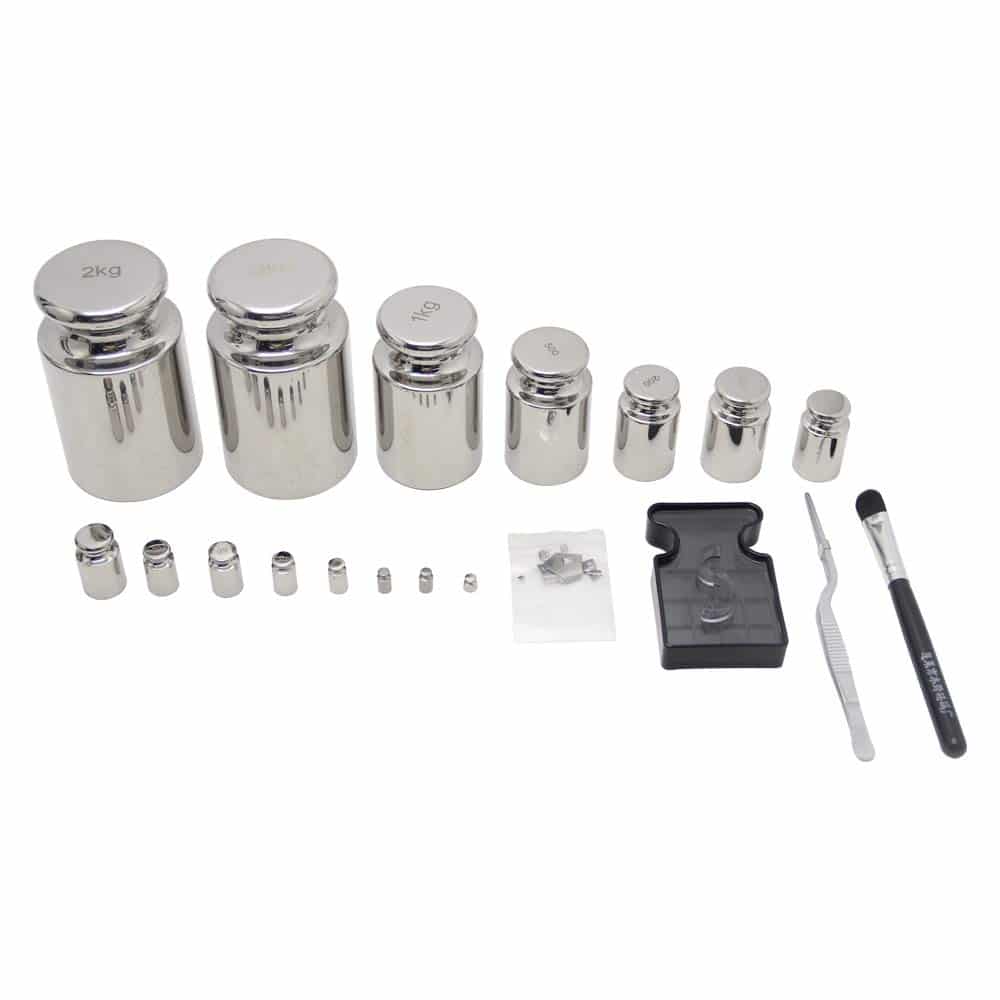
E2 Class Weights: Why M1 Fails Analytical Balances

Tiny precision E2 class weights into an analytical balance next to an oversized M1 industrial weight

By Jayson · Updated August 2026 · 9-minute read Quick answer — E2 class weights: E2 class weights are the accepted minimum reference standard for analytical balances, and an M1-class “budget” weight cannot substitute for one. Per the real OIML R111 tolerance table, M1 weights run roughly 30 times wider in tolerance than E2 at … Read more

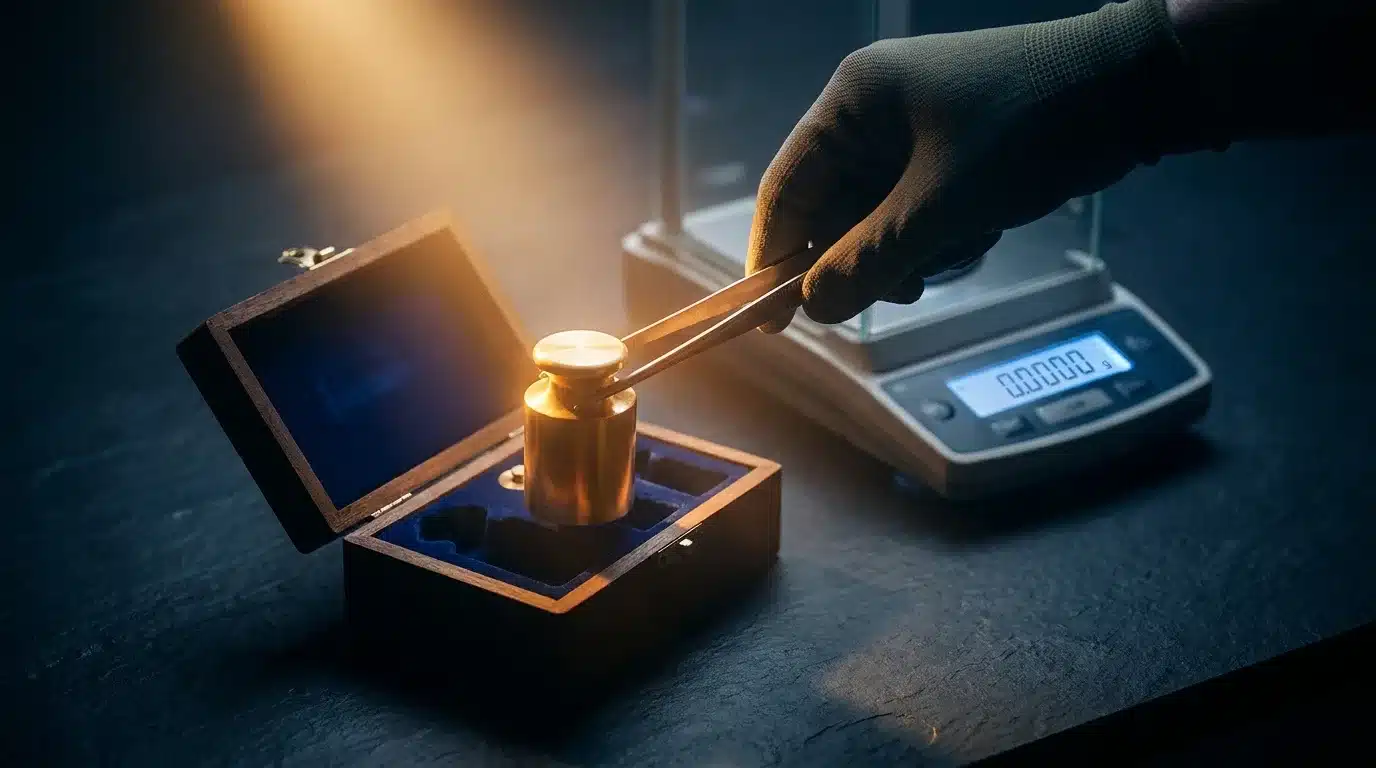
Stainless Steel Calibration Weights: Why They Win

Two analytical balances comparing stainless steel calibration weights against a chrome-plated brass weight

By Jayson · Updated August 2026 · 9-minute read Quick answer — Stainless steel calibration weights: stainless steel calibration weights outperform chrome-plated brass because chromium is built into the entire alloy, not applied as a coating. A minimum chromium content of 10.5% forms a self-healing passive oxide film across the whole surface, so even a … Read more

How Much Does a Nickel Weigh?

How Much Does a Nickel Weigh?

Nickel a chemical element that has an atomic number of 28 and with the symbol Ni. It’s silvery-white radiant metal with a bit of golden tinge. This chemical element falls under the category of transition metals. It is also malleable and hard. Pure nickel, powdered to make the most of the reactive surface area, displays … Read more

Calibration Weights

Calibration-weights

A Guide To Calibration Weights : In a world where the whole thing is virtually at a fast pace because of modernization and state-of-the-art technology, people are becoming more and more obsessed with the wonders of utilizing technologies to enhance their lives and others as well. One remarkable discovery in the area of measurement is … Read more