By Jayson · Updated August 2026 · 8-minute read
Quick answer — Scale calibration services: real published cost tiers run roughly $50-$150 for small bench scales, $100-$300 for platform scales, and $300-$1,000+ per service for truck scales, with on-site visits adding travel and service fees. A qualified technician should carry a Certified Weighing Technician (CWT) credential from ISWM, which requires Handbook 44 certification and a real exam — not just a company claiming to be "certified."
Searching for scale calibration services usually means one of two things: a scale that's already drifted, or one that's due for its scheduled check. Either way, the actual cost of scale calibration services and the actual qualifications behind the technician showing up matter more than most people realize before they've shopped around.
In this guide
- What scale calibration services actually cost
- What a certified technician actually checks
- The CWT certification, and why it matters
- On-site vs. in-shop calibration
- How often to schedule calibration
- Calibration vs. repair: two different services
- What to check before hiring a provider
- Hidden costs to watch for
- Industries that depend most on scale calibration services
- FAQ
What Scale Calibration Services Actually Cost
Real, published cost tiers from industry pricing data for scale calibration services vary significantly by scale type rather than a single flat rate:
| Scale Type | Typical Cost | Notes |
|---|---|---|
| Small bench scales | $50 – $150 per unit | Precision/lab-grade units may run higher |
| Platform scales | $100 – $300 per unit | Varies with capacity and certification level |
| Truck scales (weighbridges) | $300 – $1,000+ per service | Larger, fixed installations, on-site by necessity |
On-site visits add travel and service fees on top of these figures, and businesses managing multiple scales across several facilities often see per-unit costs drop through a service contract compared to one-off visits. Internal calibration using certified weights between professional visits is another way to reduce the total annual cost of scale calibration services, though it doesn't replace a documented, technician-performed calibration for legal-for-trade or audit purposes.
These figures are also a starting point, not a guarantee — the same platform scale in a clean indoor facility and one in a washdown or outdoor environment can carry different scale calibration services pricing, since environmental protection and travel both factor into the real quote a provider gives.
What a Certified Technician Actually Checks
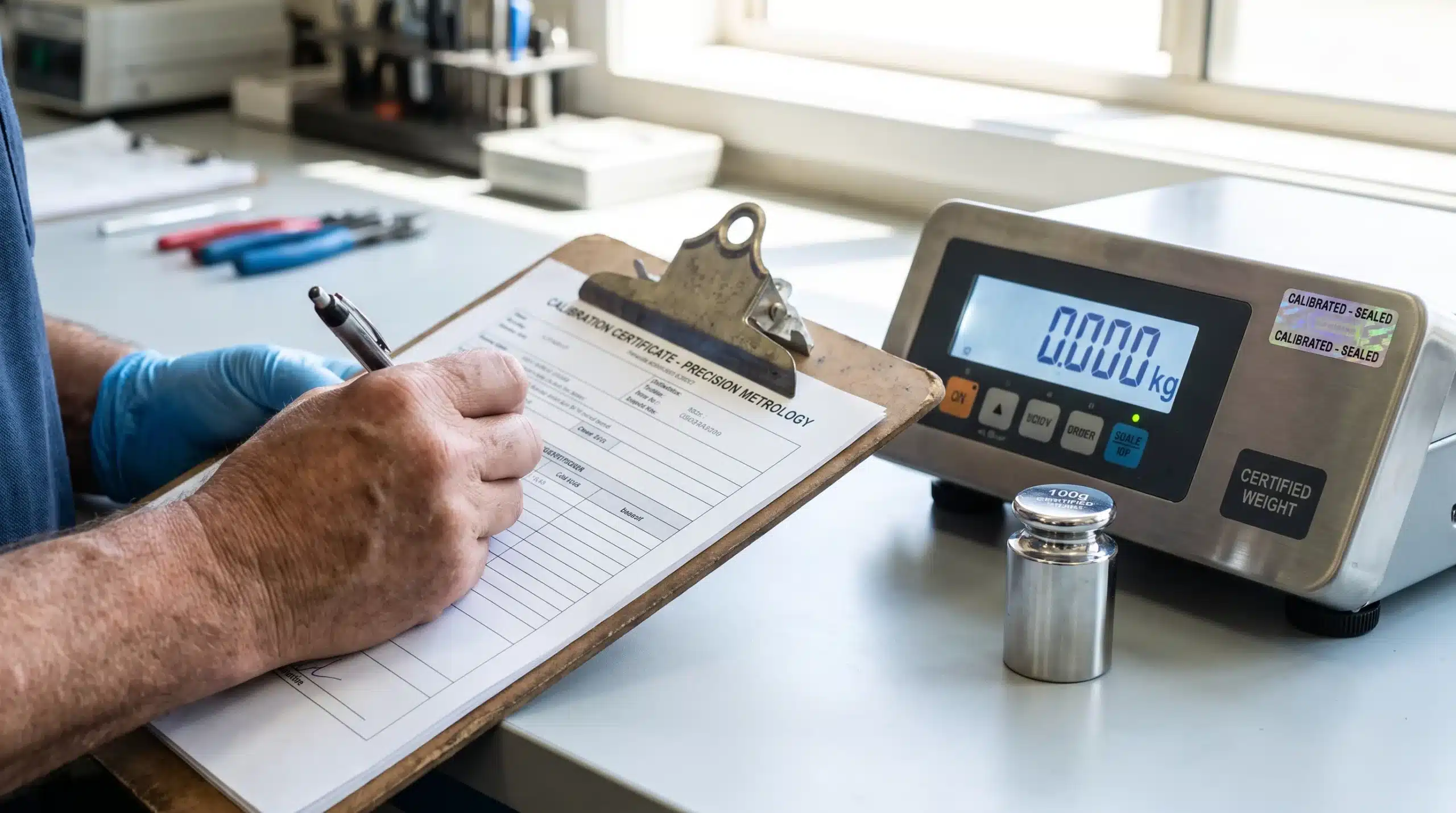
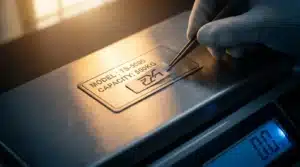
The paperwork isn't an afterthought — a documented as-found/as-left reading is what makes a calibration visit provable later.
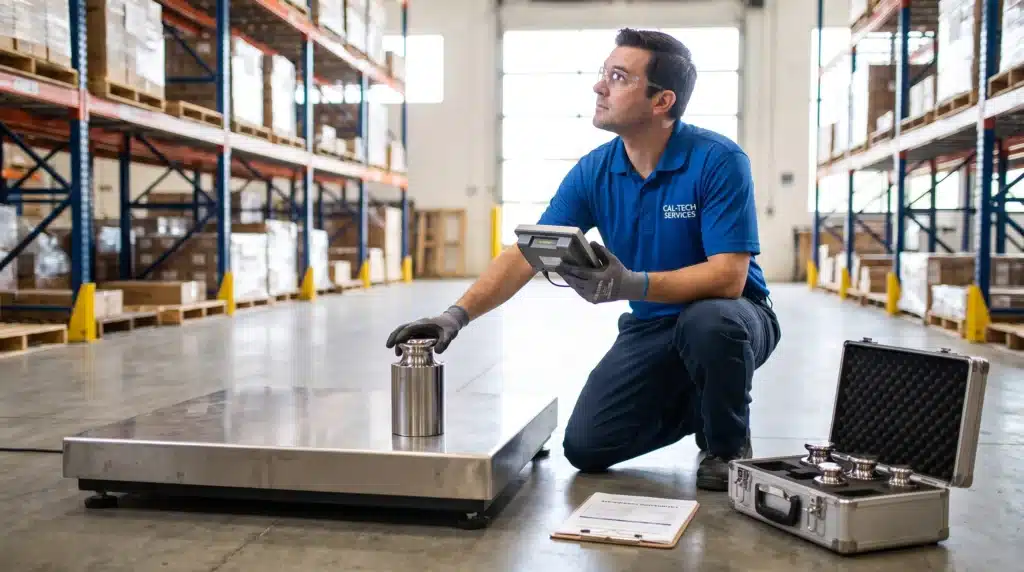
A real calibration visit tests the zero reading first, then applies certified weights across the scale's working range, comparing the displayed value against the known reference. The technician records both the "as-found" reading (before any adjustment) and the "as-left" reading (after) — that before/after comparison is exactly what an auditor or quality system looks for later, and it's the difference between a real calibration and someone eyeballing a number and calling it good.
A thorough visit also covers the mechanical side, not just the reading: checking that the platform sits level, inspecting load cell mounts and cabling for damage, and confirming the scale's environment (temperature, vibration, cleanliness) isn't quietly working against the reading before a single certified weight is even applied. Scale calibration services that skip this mechanical check and go straight to the weight comparison are doing half the job — an accurate reading on a scale with a compromised load cell mount won't stay accurate for long.
Documentation closes out the visit: a certificate naming the reference weights used, their traceability back to a national standard, the as-found and as-left values, and the technician's certification. That paperwork is the actual product being purchased as much as the adjustment itself — without it, a business has no way to prove the calibration happened at all if an inspector or auditor ever asks.
The CWT Certification, and Why It Matters
The credential worth asking about directly is Certified Weighing Technician (CWT), issued by the International Society of Weighing and Measurement (ISWM). Earning it requires a Handbook 44 Certification from an ISWM-approved testing center as a prerequisite, then a real exam — roughly 100 multiple-choice questions across ten content areas including small and heavy-capacity scales, balance equipment, systems, documentation, safety, and legal regulations, with a nearly four-hour time limit.
That's a meaningfully higher bar than a company simply claiming its technicians are "certified" without naming a real credential. Asking a prospective provider whether their technicians hold CWT certification specifically, rather than accepting a vague assurance, is one of the fastest ways to separate a genuinely qualified provider from one that isn't.
This matters more than it might seem, because "calibration" as a word carries no legal protection the way a licensed trade does — anyone can advertise scale calibration services without any credential at all. The CWT designation, and the underlying Handbook 44 training behind it, is one of the few concrete, verifiable signals a customer actually has before hiring someone to touch equipment their business depends on. A provider that names specific technicians' CWT numbers, rather than a vague company-wide claim, is showing real transparency worth valuing.
On-Site vs. In-Shop Calibration
Fixed or oversized equipment — floor scales, truck scales, pallet scales built into a warehouse floor — usually can't be shipped anywhere, which makes on-site calibration the only practical option regardless of cost. Smaller bench and platform scales have more flexibility: some businesses ship equipment to a lab for calibration, while others prefer a technician to visit on a set schedule alongside other equipment.
Heavy-duty and truck-scale calibration in particular tends to carry its own fee structure — wait-time charges, travel costs, and rush surcharges are common enough on large on-site jobs that it's worth reviewing a provider's full terms of service, not just the headline calibration price, before signing a contract.
The choice isn't always purely about equipment size, either. Some businesses with dozens of small bench scales across multiple locations still prefer on-site scale calibration services over shipping equipment, simply because it keeps the workflow interruption to a single scheduled visit rather than boxing up and losing access to instruments for days at a time. Others with a handful of scales in one facility find shipping perfectly workable and cheaper. Neither approach is universally correct — it depends on how disruptive downtime actually is for that specific operation.
How Often to Schedule Calibration
Most businesses calibrate scales at least annually, but usage intensity and regulatory requirements matter more than a fixed calendar rule. Heavy daily cycling, legal-for-trade use, and harsh environments (temperature swings, washdown conditions, outdoor installations) all justify more frequent visits — see our preventive maintenance for scales guide for the real financial data on what skipping scheduled checks actually costs a business over time, including a documented case of roughly A$75,000 a year in product giveaway from just a 1% batching-accuracy error.
That figure is worth sitting with for a moment: the cost of scheduling regular scale calibration services is almost always a small fraction of what a single year of undetected drift can quietly cost a business in wasted material, mispriced freight, or failed audits. Treating the annual or semi-annual visit as an expense to minimize, rather than a genuinely cheap form of insurance, is one of the more common false economies businesses fall into.
Calibration vs. Repair: Two Different Services
Calibration checks and adjusts accuracy against certified weights; repair fixes an actual mechanical or electrical fault. A scale can need one service without the other — a perfectly functional scale can still drift out of tolerance and need only calibration, while a scale with a damaged load cell needs repair before calibration can even produce a meaningful result. That said, a badly out-of-tolerance reading during a routine calibration visit sometimes signals an underlying mechanical problem worth investigating rather than just adjusting around.
Many providers of scale calibration services also offer repair as a bundled or add-on service, which is convenient when a technician already on-site discovers a mechanical issue during the calibration process. It's still worth understanding how a provider prices repair work separately from calibration, since bundling the two into a single quote can sometimes obscure which part of the total cost is actually calibration and which is repair labor. Asking for an itemized breakdown, rather than one combined number, makes it easier to compare quotes between providers and to budget for calibration and repair as the two genuinely separate services they are.
What to Check Before Hiring a Provider
Choosing between scale calibration services providers comes down to a handful of direct questions worth asking before committing:
- Do your technicians hold CWT certification? Ask by name, not "are you certified" — the specific credential is what separates real qualification from marketing language.
- Are your reference weights NIST-traceable? A provider should answer this immediately, with documentation, not a vague assurance.
- What's included in the quoted price, and what costs extra? Wait-time charges, travel fees, and rush surcharges can meaningfully change the real cost of a visit.
- Do you provide as-found/as-left documentation? This is the paper trail that actually matters during an audit or inspection — a provider that doesn't offer it by default is cutting a real corner.
- How do you handle equipment that fails calibration? A reputable provider should have a clear process for out-of-tolerance results, not just a pass/fail stamp.
Running through this list with two or three competing providers before choosing one turns scale calibration services from a commodity purchase into an informed decision, and it rarely takes more than a few phone calls to get clear answers on all five points.
Hidden Costs to Watch For
The quoted per-unit price is rarely the whole story with scale calibration services. A few line items that commonly show up separately from the headline number:
- Wait-time charges. If a technician arrives on-site and equipment isn't ready, some providers bill hourly for the delay — a real cost detailed in our heavy-duty calibration services breakdown of one accredited lab's actual fee schedule.
- Accreditation premiums. ISO/IEC 17025-accredited certificates often cost more than a standard, non-accredited one — sometimes 20% or more above the base price.
- Rush or expedite fees. Needing a faster turnaround than the standard scheduling window usually carries a real surcharge, not a flat rate.
- Minimum order charges. A single small item can trigger a minimum service charge that makes a one-off visit less economical than bundling it with other equipment.
- Travel and mobilization fees. Especially relevant for on-site visits to remote locations or facilities requiring specialized access.
None of these are unreasonable on their own, but a provider that doesn't disclose them up front — burying them in fine print rather than the initial quote — is a real warning sign about how the rest of the relationship with that scale calibration services provider is likely to go. Requesting a full, itemized quote before signing anything, rather than a single bundled number, is the simplest way to surface these costs while there's still room to compare against a competing provider.
Industries That Depend Most on Scale Calibration Services
Scale calibration services matter most in industries where an inaccurate reading has consequences beyond a single bad measurement. Manufacturing and food processing rely on accurate weights for consistent product formulation and portion control. Pharmaceutical and clinical settings depend on precise dosing measurements where a small error carries real patient-safety risk — see our scale calibration accuracy requirements guide for the real published data on how often medical scales fail without proper calibration. Logistics, freight, and recycling operations bill customers and suppliers by weight, making legal-for-trade accuracy a direct financial issue rather than just a quality concern.
Even outside these regulated or high-stakes sectors, any business using a scale to control inventory, verify shipments, or manage material costs has a real financial reason to keep its equipment on a documented calibration schedule rather than treating scale calibration services as an occasional afterthought. The industries differ, but the underlying math is the same everywhere: the cost of the service is small and predictable, while the cost of an undetected drift compounds quietly until something — an audit, a customer complaint, a failed inspection — forces the issue.
Conclusion
Scale calibration services aren't a single, fixed-price commodity — real costs range from $50 for a small bench scale to well over $1,000 for a truck scale visit, and the qualifications behind the technician matter as much as the number on the invoice. A CWT-certified technician following a documented as-found/as-left process, using NIST-traceable weights, is worth more than a cheaper provider cutting corners on any of those three things.
The cheapest quote for scale calibration services is rarely the best value once the hidden costs, certification gaps, and documentation quality are actually compared line by line. Ask the direct questions above before signing a contract, request an itemized quote rather than a bundled number, and the real cost — and real value — of the service becomes a lot clearer than the headline price alone ever suggests.
Frequently Asked Questions
How much do scale calibration services cost?
Real published cost tiers run roughly $50-$150 per unit for small bench scales, $100-$300 for platform scales, and $300-$1,000+ per service for truck scales (weighbridges) — on-site visits add travel and service fees on top.
What certification should a scale calibration technician have?
Look for a Certified Weighing Technician (CWT) credential from the International Society of Weighing and Measurement (ISWM), which requires a Handbook 44 Certification and a roughly 100-question exam covering scale types, systems, documentation, safety, and legal regulations.
How often should scale calibration services be scheduled?
Most businesses schedule calibration at least annually, with more frequent visits for legal-for-trade use, heavy daily cycling, or harsh environments. Usage intensity and regulatory requirements matter more than a fixed calendar rule.
What's the difference between scale calibration and scale repair?
Calibration checks and adjusts accuracy against certified weights. Repair fixes a mechanical or electrical fault. A scale can need one without the other, though a badly out-of-tolerance reading sometimes signals an underlying mechanical problem a calibration visit alone won't fix.
Is on-site calibration more expensive than sending a scale to a lab?
On-site calibration typically adds travel and service fees, but it's often still cheaper and faster than shipping large or fixed equipment like floor scales and truck scales, which usually can't be transported at all.
More Related Guides
- Heavy-Duty Calibration Services — scalecalibration.net/heavy-duty-calibration-services/ — a real published fee schedule from an accredited lab.
- Accredited Calibration Laboratory — scalecalibration.net/accredited-calibration-laboratory/ — what ISO/IEC 17025 accreditation actually verifies.
- Preventive Maintenance for Scales — scalecalibration.net/preventive-maintenance-for-scales/ — the real financial cost of skipping scheduled calibration.
- Industrial Scales — scalecalibration.net/industrial-scales/ — types, capacities, and what to actually buy.
- Calibration Weights — scalecalibration.net/calibration-weights/ — the certified references a technician uses.